


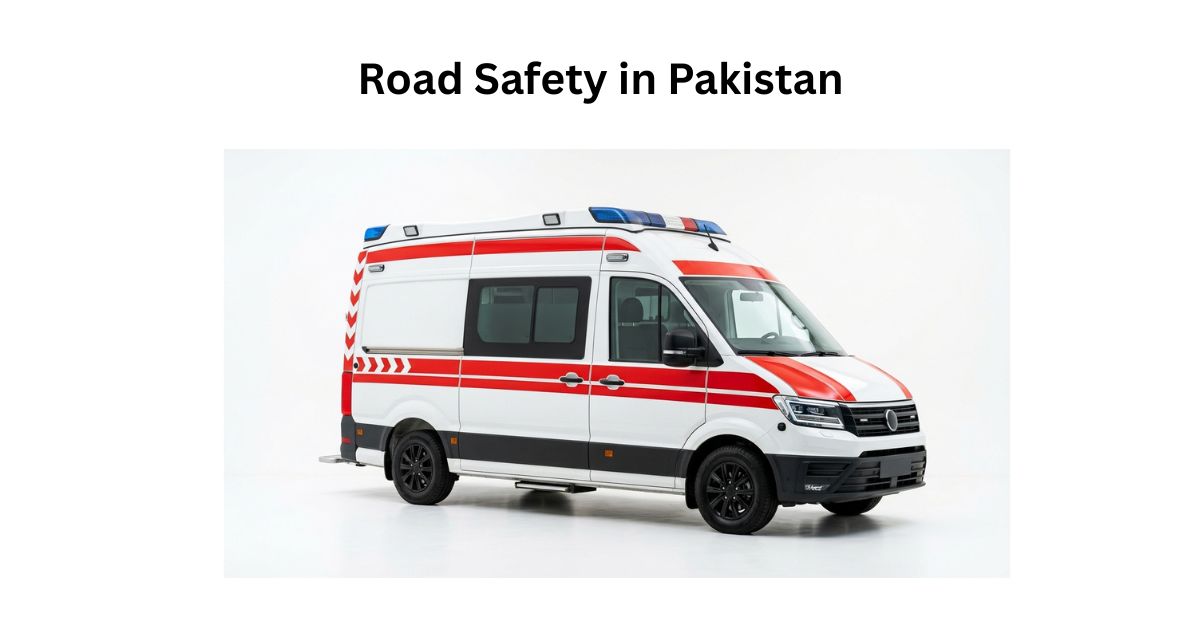
Road Safety in Pakistan: How to Help After an Accident Without Making It Worse
📋 Table of Contents
- Why Bystander Help Often Makes Things Worse
- Step 1: Make the Scene Safe
- Step 2: Call for Professional Help
- Step 3: Do NOT Move Injured Victims
- Step 4: Safe First Aid You Can Give
- What to Do With a Motorcycle Helmet
- Do's and Don'ts at an Accident Scene
- Common Mistakes That Cause Additional Harm
- Special Situations – Fires, Water, Multiple Casualties
- After the Ambulance Arrives
- FAQs – Road Safety & Accident Response
- Related Articles & Services
Pakistan has one of the highest road accident fatality rates in the world. Every day, thousands of accidents occur on our streets and highways — from motorcycle collisions to multi-vehicle pile-ups on motorways. When an accident happens, bystanders often want to help, and that instinct is admirable. But well-meaning help can turn a survivable injury into a permanent disability or a fatal one.
The most common dangerous mistake is moving an injured person. A person with a suspected neck or spinal injury who is pulled, dragged, or lifted out of a vehicle may become permanently paralyzed — even if they could have walked away unharmed. Other common mistakes include giving food or water to a victim who may need emergency surgery, removing a motorcycle helmet incorrectly, and crowding the patient so they can't breathe.
This guide is written for every Pakistani driver, rider, and citizen. It explains exactly how to help at an accident scene without making things worse — how to secure the scene, call for help, provide safe first aid, and wait for professionals. Learning these principles could save a life — possibly someone in your own family.
⚠️ Why Bystander Help Often Makes Things Worse in Pakistan
Pakistan's accident scenes are often chaotic. Crowds gather quickly, traffic keeps moving dangerously close, and people rush to "help" without knowing what they're doing. Here's why that can be deadly.
- 🦴 Spinal cord injuries: Moving a victim with a neck or back injury can cause permanent paralysis
- 🩸 Worsening bleeding: Improper handling can dislodge clots and increase bleeding
- 🫁 Airway obstruction: Food, water, or poor positioning can block the airway
- 🦵 Fracture displacement: Moving limbs with fractures can cause nerve and vessel damage
- 🧠 Head injuries: Shaking or jolting a head injury patient can worsen brain damage
- 🚗 Secondary accidents: Bystanders and victims standing in the road can be hit by other vehicles
- 🔥 Fires and fuel: Accidents with fuel leakage or fire require special handling
- 👥 Crowd interference: Dozens of people crowding the victim prevent proper care
- 📱 Social media filming: Instead of helping, some bystanders film — delaying care
- ⏱️ Ambulance access: Crowds block ambulance access to the victim
📊 Most Common Bystander Mistakes at Pakistani Accident Scenes
*Based on emergency responder observations across Pakistani cities.
⭐ The Golden Rule of Accident Response
Do not move an injured person unless there is immediate danger (fire, oncoming traffic, or explosion). Wait for trained paramedics with proper equipment.
You cannot "fix" a spinal injury by moving someone faster — but you can cause permanent paralysis by moving them wrongly.
🛡️ Step 1: Make the Scene Safe
Before you help anyone, ensure the scene is safe. Your safety comes first — you cannot help if you become a second victim.
2. Turn on hazard lights: Warn oncoming traffic.
3. Place warning triangles: If you have them, place 30–50 meters behind the accident scene.
4. Wear reflective vest: If available, wear high-visibility clothing.
5. Check for hazards: Fuel leaks, fire, broken glass, downed power lines, oncoming traffic.
6. Do NOT smoke: If there's a fuel leak, a cigarette can cause a fire.
7. Ask others to help: Have bystanders flag oncoming traffic.
8. Alert motorway police (130): If on a motorway, call for scene management.
📞 Step 2: Call for Professional Help
Calling for help is the most important thing you can do. Do it BEFORE attempting any first aid.
| Service | Number | When to Call |
|---|---|---|
| Insaf Ambulance | +92 329 8041122 | Any injury, especially critical patients needing ICU/oxygen |
| Rescue 1122 | 1122 | Accidents requiring extrication, general emergencies |
| Edhi Foundation | 115 | Free ambulance, general emergencies |
| Chhipa Welfare | 1020 | Free ambulance (Karachi, Sindh, parts of Punjab) |
| Police | 15 | Accident report, traffic control, legal procedures |
| Motorway Police | 130 | Motorway accidents (M-1 to M-9) |
| Fire Brigade | 16 | Fire, fuel leakage, rescue from trapped vehicles |
What to Tell the Dispatcher
2. Number of casualties: One or multiple victims.
3. Severity: "Conscious," "unconscious," "bleeding heavily," "trapped."
4. Hazards: Fire, fuel leak, blocked lane, weather.
5. Type of vehicles: Car, motorcycle, truck, bus.
6. Your callback number: Stay reachable.
For a complete guide, see our article on what to tell the ambulance dispatcher.
🚫 Step 3: Do NOT Move Injured Victims
This is the single most important rule at an accident scene — and the most commonly broken one in Pakistan.
Why You Should Not Move a Victim
- 🦴 Suspected spinal injury: Any accident involving head trauma, unconsciousness, or high-speed collision may have caused neck or spine injury
- 🧠 Head injury: Even minor head trauma can involve hidden bleeding
- 🩸 Internal bleeding: Moving the patient can worsen bleeding
- 🦵 Fractures: Moving a broken limb can cause nerve damage or severed arteries
- 🫁 Compromised breathing: Movement may worsen chest injuries
- 💔 Cardiac stress: Sudden movement can trigger cardiac arrest in unstable patients
When You CAN Move a Victim
- 🔥 Fire: If the vehicle or patient is on fire, move them immediately
- 💥 Explosion risk: If the vehicle may explode, move away
- 🚗 Oncoming traffic: If in the middle of a busy road with imminent risk
- 🌊 Water: If the patient is in water and drowning
- 🏗️ Falling debris: If structural collapse is possible
If You MUST Move a Victim (Emergency Only)
2. Support the head and neck: Use both hands to stabilize the head. If available, use a cervical collar.
3. Keep the body in line: Move the entire body as one unit — head, neck, and torso together.
4. Use a backboard if available: Or a rigid, flat surface.
5. Multiple rescuers: Use 4–5 people for safe lifting.
6. Drag only if necessary: Drag by the shoulders/clothing while supporting the head — never by the limbs or head.
7. Move to a safe place: At least 30 meters from immediate danger.
8. Do not twist the spine: Avoid rotation of the head or torso.
🩹 Step 4: Safe First Aid You Can Give
While waiting for the ambulance, you can provide safe first aid that helps without causing harm.
| Situation | Safe First Aid Action | Do NOT |
|---|---|---|
| Severe bleeding | Apply firm direct pressure with a clean cloth. Add layers if soaked. Elevate limb if possible. | Do not remove cloth to check. Do not use tourniquet unless trained. |
| Unconscious but breathing | Place in recovery position (on side). Monitor breathing. Keep warm. | Do not leave unattended. Do not give food/water. |
| Not breathing | Start CPR immediately — 100–120 compressions per minute. | Do not delay CPR. Do not stop until help arrives. |
| Suspected spinal injury | Keep still. Support head in position found. Do not move. Wait for ambulance. | DO NOT MOVE. |
| Fractures | Immobilize the limb in the position found. Support with padding. | Do not try to straighten the limb. |
| Burns | Cool with running water for 20 minutes. Cover with clean, non-stick dressing. | Do not apply ice, toothpaste, oil, or ointments. |
| Shock | Lay flat, raise legs slightly. Keep warm. Reassure. | Do not give food or drink. |
| Head injury | Keep head still. Monitor consciousness. Watch for vomiting/confusion. | Do not shake. Do not remove helmet unless necessary. |
| Choking | Back blows + abdominal thrusts (Heimlich maneuver) if trained. | Do not blindly put fingers in mouth. |
| Seizures | Clear surrounding objects. Do not restrain. Time the seizure. | Do not put anything in mouth. |
Step-by-Step Basic First Aid at an Accident
2. Check breathing: Look at chest for 10 seconds.
3. Not breathing? Start CPR immediately.
4. Breathing? Control any bleeding with firm direct pressure.
5. Keep the patient warm: Blanket or jacket over them.
6. Reassure the patient: Talk calmly, keep them still.
7. Do not give food or water: They may need surgery.
8. Keep monitoring: Watch breathing, consciousness, and bleeding.
9. Do not leave alone: Stay with the person until help arrives.
🪖 What to Do With a Motorcycle Helmet
Motorcycle accidents are extremely common in Pakistan. Knowing how to handle a helmet correctly can prevent worsening a neck injury.
✅ DO
- Leave the helmet ON if the rider is breathing and no airway obstruction
- Support the head and neck while the helmet is in place
- Remove the helmet ONLY if the airway is blocked (vomiting, blood)
- Use two people to remove — one supports head, one removes helmet
- Remove visor/chin strap first, then gently slide the helmet off
- Keep the head neutral and in line with the spine
❌ DON'T
- Do not pull the helmet by the visor
- Do not twist or rotate the head
- Do not remove the helmet roughly
- Do not yank the helmet while the neck is unsupported
- Do not try to remove it alone — get help
- Do not remove the helmet unnecessarily
When to remove the helmet:
- 🚫 Airway obstruction: Vomiting, blood, or secretions blocking the airway
- 🫁 Not breathing: CPR requires helmet removal for effective compressions and ventilation
- 🧠 Cardiac arrest: Helmet removal is necessary for resuscitation
- 🚨 Trapped in a vehicle: Helmet may need to be removed for safe extrication
Otherwise, leave the helmet in place. Paramedics have special tools and training to remove helmets safely.
✅❌ Do's and Don'ts at an Accident Scene
✅ DO These
- Make the scene safe first
- Call the ambulance immediately
- Note the time of accident
- Control bleeding with pressure
- Keep the patient warm
- Reassure the patient
- Support the head/neck if spinal injury suspected
- Clear the crowd
- Guide the ambulance to the scene
- Stay with the victim
❌ DON'T Do These
- Do not move the victim unless in danger
- Do not give food or water
- Do not remove helmet unnecessarily
- Do not crowd the patient
- Do not shake the person
- Do not try to "straighten" fractures
- Do not apply ice to burns
- Do not smoke near fuel leaks
- Do not film for social media before helping
- Do not leave the scene
🚫 Common Mistakes That Cause Additional Harm
These mistakes are extremely common at Pakistani accident scenes — and each one can cause permanent harm.
| Mistake | Consequence | Correct Action |
|---|---|---|
| Pulling victim out of vehicle | Spinal cord damage, paralysis | Wait for ambulance with spinal equipment |
| Giving water to injured person | Choking, aspiration, surgery risk | Do not give food or water |
| Removing motorcycle helmet roughly | Neck injury, paralysis | Remove only if necessary, with support |
| Shaking an unconscious person | Worsens head/spine injury | Keep still, monitor breathing |
| Standing in the road | Secondary accidents, more casualties | Move to shoulder, warn traffic |
| Crowding around victim | Blocks air, ambulance access | Keep crowd back |
| Filming for social media | Delays care, privacy violation | Help first, film never |
| Driving injured person yourself | Worsens injuries during transport | Call ambulance for proper transport |
| Applying toothpaste/oil to burns | Worsens burn, infection risk | Cool with water only |
| Leaving the scene | Legal offense; patient abandoned | Stay until help arrives |
🌊 Special Situations – Fires, Water, Multiple Casualties
Vehicle on Fire
- 🔥 Do not approach if the vehicle is on fire — risk of explosion
- 🚨 Call Fire Brigade (16) and ambulance immediately
- 🏃 Move to at least 30 meters away
- 💨 Move upwind of the smoke
- 🚗 Do not open the hood — feeds the fire with oxygen
- 🧯 Use fire extinguisher only if trained and fire is small
- 🚪 Extricate victims only if safe — never become a victim yourself
Vehicle in Water
- 🌊 Call for help immediately
- 🚪 Open doors/windows as soon as water starts entering — before pressure builds
- 💨 Break a window if doors won't open
- 🫁 Get to the surface — do not attempt to rescue without training
- 🩺 Give CPR if the victim is not breathing after rescue
- 🌡️ Treat for hypothermia — warm the patient
Multiple Casualties
- 📞 Call ambulance and specify "multiple casualties"
- 🚑 Request multiple ambulances — 1122 can dispatch several
- 🩺 Triage the victims: Prioritize those with life-threatening injuries
- 🩸 Control bleeding first on the most urgent patients
- 🗣️ Assign helpers: Have others comfort stable victims
- 🏥 Designate a coordinator: One person communicating with the ambulance
- 🚗 Keep the road clear for ambulances
🚑 After the Ambulance Arrives
Your help doesn't end when paramedics arrive. Proper handover helps the medical team provide better care.
2. Mention any first aid given: "I applied pressure to the bleeding."
3. Time of onset: Note when the accident happened — critical for treatment decisions.
4. Patient details: Name, age (if known), any visible injuries.
5. Medications (if known): Any conditions or medications from ID or family.
6. Step back: Let paramedics work.
7. Keep the crowd back: Ensure paramedics have space.
8. Document the scene: If safe, take photos for police report (after helping).
9. Provide witness info: Give your contact if you witnessed the accident.
10. Do not follow the ambulance.
❓ Frequently Asked Questions – Road Safety & Accident Response
1. Should I move an injured person from an accident scene?
No — unless there is immediate danger (fire, oncoming traffic, explosion, water). Suspected spinal injuries can become permanent paralysis if moved incorrectly. Keep the person still, support the head and neck, and wait for the ambulance with proper equipment. For detailed guidance, see our article on why you should never move an accident victim without a neck brace.
2. What should I do immediately after witnessing a road accident?
First, ensure your own safety — park safely, use hazard lights, watch for traffic. Call an ambulance immediately at +92 329 8041122 or 1122. Do not move the injured unless there is immediate danger. Control visible bleeding with pressure. Keep the patient warm and reassure them. Keep the crowd back and guide the ambulance to the exact location.
3. Should I remove a motorcycle rider's helmet after an accident?
Leave the helmet on unless the airway is blocked (vomiting, blood) or the victim is not breathing. Removing the helmet incorrectly can cause neck and spine injury. If removal is necessary, use two people — one supports the head and neck while the other gently removes the helmet by sliding it off (never pulling by the visor).
4. Can I give water to an injured person after an accident?
No. Do not give food or water to an injured person. They may need emergency surgery, which requires an empty stomach. If they're unconscious or confused, there is a serious choking risk. Wait until paramedics have assessed the patient before giving anything by mouth.
5. What are the most common mistakes bystanders make at accident scenes in Pakistan?
The most common mistakes are: (1) moving injured victims, (2) giving food or water, (3) removing helmets incorrectly, (4) crowding the patient and blocking air/ambulance access, (5) filming for social media instead of helping, and (6) driving the injured person themselves rather than waiting for an ambulance. Each of these can cause additional harm or delay professional care.
🔗 Related Articles & Our Ambulance Services
Our Services:
🚑 Ambulance Service in Pakistan✈️ Airport Ambulance Service
🎪 Event Medical Coverage Pakistan
🏥 ICU Ambulance Service
Helpful Articles:
🚑 Ambulance from PIMS to Lahore: Fare, Route & What to Pack🆓 Free Ambulance Services in Pakistan: Complete List (Edhi, Chhipa, 1122)
🚦 Ambulance Etiquette in Pakistan: How to Make Way for Emergency Vehicles
🌡️ Heatwave Medical Emergencies in Pakistan: How Ambulance Services Respond
🚨 In an accident, help without harming — and call us immediately.
📞 Call: +92 329 8041122 💬 WhatsApp UsICU, ALS, Oxygen & BLS ambulances with spinal immobilization equipment — available 24/7 across Pakistan.
© Insaf Ambulance Services – Rapid, Reliable, and Compassionate Emergency Care Across Pakistan.