


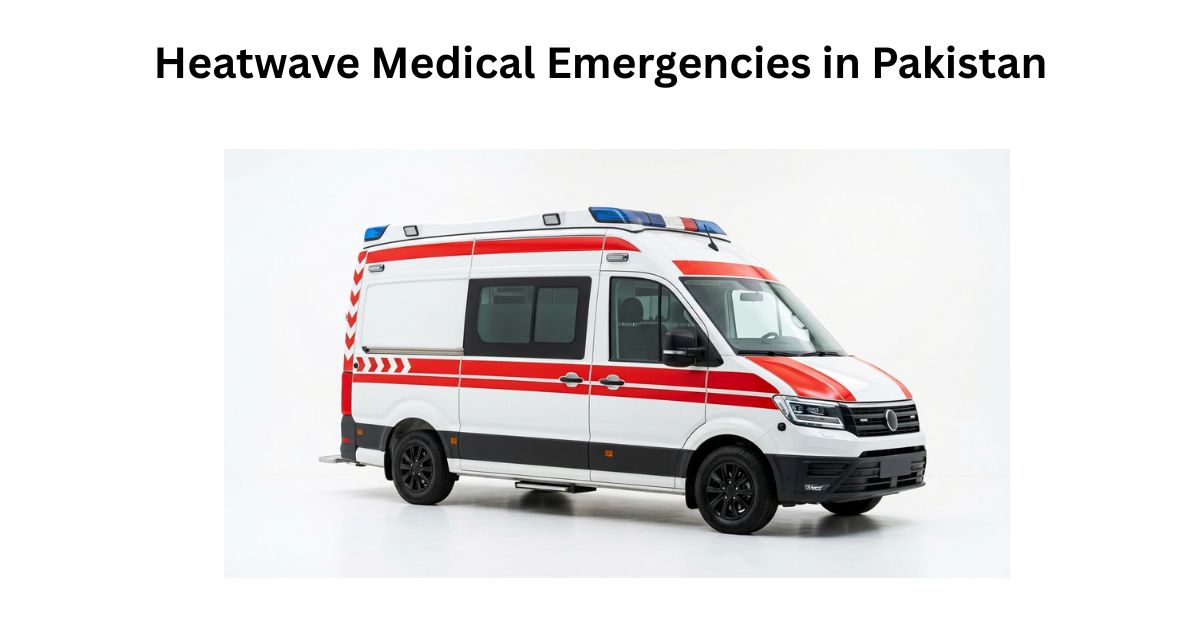
Heatwave Medical Emergencies in Pakistan: How Ambulance Services Respond
📋 Table of Contents
- Why Heatwaves Are Deadly in Pakistan
- Heat-Related Medical Emergencies
- Heat Stroke Warning Signs
- How Ambulance Services Respond to Heatwaves
- Equipment for Heat Emergency Response
- Cooling First Aid While Waiting
- Who Is Most at Risk?
- Response Times During Heatwaves
- Prevention – Staying Safe in Extreme Heat
- FAQs – Heatwave Medical Emergencies
- Related Articles & Services
Every summer, Pakistan experiences brutal heatwaves that push temperatures above 45°C in cities like Karachi, Lahore, Jacobabad, and Multan. These aren't just uncomfortable — they are deadly. The 2015 Karachi heatwave killed over 1,200 people in a matter of days. The 2024 heatwaves set new records across the country. And with climate change intensifying, the threat is growing every year.
Heat-related medical emergencies are among the most time-sensitive in emergency medicine. A patient with heat stroke can die within 30–60 minutes if their body temperature isn't rapidly cooled. Unlike heart attacks or strokes, where hospital treatment is the priority, heat stroke requires aggressive first aid before the patient even reaches the ambulance — and cooling must continue during transport.
This guide explains how heatwaves create medical emergencies, what heat stroke looks like, how ambulance services in Pakistan respond, what families should do while waiting for help, and who is most at risk. Whether you're in Karachi, Lahore, or any other hot region, this information could save a life — perhaps your own.
🌡️ Why Heatwaves Are Deadly in Pakistan
Pakistan is among the countries most vulnerable to extreme heat. Multiple factors combine to make heatwaves especially dangerous here.
- 🔥 Extreme temperatures: Cities like Jacobabad routinely cross 50°C — among the hottest on Earth
- 💧 High humidity in coastal cities: Karachi's humidity makes heat stroke risk far worse (heat index)
- ⚡ Power outages: Load-shedding removes fans, ACs, and refrigeration during heatwaves
- 💦 Water shortages: Limited access to clean drinking water, especially in low-income areas
- 🏠 Poor housing: Tin roofs, no ventilation, crowded living conditions
- 🚶 Outdoor workers: Laborers, farmers, and street vendors exposed to peak heat
- 🌳 Lack of green cover: Urban heat islands make cities hotter than surrounding areas
- 🚗 Vehicle exposure: Traffic police, rickshaw drivers, and commuters
- 👴 Elderly population: Reduced ability to regulate body temperature
- 🏥 Limited healthcare access: Delays in reaching hospitals
- 🌫️ Air pollution: Worsens respiratory stress during heatwaves
📊 Heat-Related Deaths in Major Pakistani Heatwaves
*Estimates based on reported figures. Actual heat-related deaths are often undercounted.
🔥 The Heat Index Effect
What is heat index? The heat index combines air temperature and humidity to represent how hot it actually feels. At 40°C with 60% humidity, the heat index is 55°C — the body cannot cool itself through sweating.
In Karachi: Coastal humidity makes 38°C feel like 50°C or more.
In Lahore: Dry heat with less humidity but higher absolute temperatures.
The danger: High humidity is more dangerous than high temperature alone because sweat doesn't evaporate — the body's main cooling mechanism fails.
🚨 Heat-Related Medical Emergencies
Heat illnesses range from mild to life-threatening. Understanding the progression helps you act at the right time.
| Condition | Symptoms | Severity | Action |
|---|---|---|---|
| Heat Cramps | Muscle cramps, heavy sweating, thirst | 🟢 Mild | Rest, hydrate, move to shade |
| Heat Syncope | Fainting, dizziness after heat exposure | 🟡 Moderate | Lay flat, elevate legs, cool, hydrate |
| Heat Exhaustion | Heavy sweating, weakness, nausea, headache, pale skin, fast pulse | 🟠 High | Move to cool place, ORS, cool compress, call ambulance if worsening |
| Heat Stroke | Body temp >40°C, confusion, no sweating (classic), collapse, seizures, unconsciousness | 🔴 Critical | CALL AMBULANCE IMMEDIATELY + start cooling while waiting |
| Heat-Related Heart Attack | Chest pain, breathlessness, collapse during heat exposure | 🔴 Critical | Call ambulance, keep patient cool, do not exert |
| Heat-Related Asthma | Wheezing, breathlessness in hot air | 🟠 High | Call ambulance, use inhaler, move to cool air |
| Dehydration (severe) | No urination, sunken eyes, confusion, weakness | 🔴 Critical | Call ambulance, give ORS if conscious |
📊 Heat Illness Progression & Mortality Risk
*Heat stroke mortality can reach 80% if cooling is delayed beyond 1 hour.
⚠️ Heat Stroke Warning Signs – Act Immediately
Heat stroke is a medical emergency that can kill within an hour. Recognizing it quickly is essential.
🚨 Classic Heat Stroke Signs
Body temperature above 40°C (104°F) — this is the defining sign
Altered mental state: Confusion, agitation, slurred speech, seizures, or unconsciousness
Hot, dry skin: Classic heat stroke often has NO sweating — the body has stopped trying to cool itself
Rapid, strong pulse
Throbbing headache
Nausea or vomiting
Flushed (red) skin
Collapse or fainting
Heat Exhaustion vs Heat Stroke
| Feature | Heat Exhaustion | Heat Stroke |
|---|---|---|
| Body temperature | 37–40°C | >40°C |
| Mental state | Normal (may be anxious) | Confused, agitated, or unconscious |
| Sweating | Heavy sweating | May be absent (classic) or present (exertional) |
| Skin | Cool, moist, pale | Hot, dry or flushed |
| Pulse | Fast but weak | Fast and strong |
| Urgency | 🟠 High — monitor for worsening | 🔴 Critical — call ambulance now |
| Action | Cool, hydrate, rest, watch | Cool aggressively, call 1122 immediately |
🚑 How Ambulance Services Respond to Heatwaves
During heatwaves, ambulance services across Pakistan activate enhanced protocols to handle the surge in heat-related emergencies. Here's how Insaf Ambulance and other providers respond.
Pre-Heatwave Preparation
- 📊 Weather monitoring: Tracking heatwave forecasts to pre-position ambulances
- 🚑 Fleet readiness: Ensuring AC systems, cooling equipment, and IV fluids are stocked
- 🧑⚕️ Staff training: Refresher on heat stroke protocols and rapid cooling
- 📦 Equipment stock: Extra cold packs, ORS, IV fluids, cooling blankets
- 🏥 Hospital coordination: Pre-alerting hospitals for surge capacity
- 📍 Strategic positioning: Ambulances placed in high-risk areas (labor sites, markets, industrial zones)
- 📞 Additional dispatch lines: More staff to handle increased call volume
During a Heatwave – Response Protocol
Step 2 – Rapid response: Nearest ambulance dispatched, with GPS routing to avoid traffic.
Step 3 – Cooling guidance by phone: Dispatcher instructs caller on immediate cooling (ice packs, water, shade).
Step 4 – On-scene assessment: Paramedics confirm temperature and mental status.
Step 5 – Active cooling in ambulance: AC on maximum, cold packs to neck/armpits/groin, cool IV fluids.
Step 6 – Oxygen therapy: Supplemental oxygen if SpO₂ is low.
Step 7 – IV fluids: For dehydration and to help with cooling.
Step 8 – Continuous monitoring: Core temperature, heart rhythm, blood pressure tracked.
Step 9 – Hospital pre-notification: Alerting ER to prepare cooling equipment.
Step 10 – Rapid transport: Hospital chosen based on cooling capability and ICU availability.
What Makes Heat Emergency Response Different
- ❄️ Cooling is the primary treatment: Unlike other emergencies, the priority is physical cooling, not just transport
- ⏱️ Extremely time-critical: Every minute of delay increases mortality significantly
- 🌡️ Environmental hazard: Heat stroke patients are often in unsafe environments (roadsides, worksites)
- 👥 Mass casualty potential: Heatwaves can produce multiple simultaneous emergencies
- 🚗 Vehicle AC capability matters: Ambulances must keep patients cool en route
- 💧 Hydration: IV fluids are crucial for most heat patients
🧰 Equipment for Heat Emergency Response
Ambulances responding to heat emergencies carry specialized equipment to cool patients and manage complications.
| Equipment | Purpose | How It Helps |
|---|---|---|
| Cold Packs / Ice Packs | Targeted cooling | Applied to neck, armpits, groin — areas of high blood flow |
| Cooling Blankets | Whole-body cooling | Wet or refrigerated blankets placed over the patient |
| Portable Fan | Air circulation | Enhances evaporative cooling |
| Water Spray | Evaporative cooling | Spray water on skin + fan = rapid cooling |
| IV Fluids (cooled) | Hydration + cooling | Cool IV fluids lower core temperature from inside |
| ORS Packets | Oral rehydration | For conscious patients with heat exhaustion |
| Oxygen Cylinders | Supplemental oxygen | For patients with low SpO₂ or respiratory distress |
| Cardiac Monitor | Vital signs monitoring | Heat stroke can cause arrhythmias and cardiac arrest |
| Defibrillator | Cardiac arrest response | For heat-related cardiac arrest |
| Thermometer (core temp) | Temperature monitoring | Tracks cooling progress; core temp is critical |
| Suction Machine | Airway management | For vomiting or seizures |
| Powerful AC | Vehicle cooling | Critical to keep ambulance cool throughout transport |
| Sterile Water for Cooling | Body spraying | For cooling during transport |
🩹 Cooling First Aid While Waiting for the Ambulance
Heat stroke requires cooling within minutes — long before the ambulance arrives. These first-aid steps save lives.
🚨 Immediate Cooling Steps
1. Move to shade or cool area: Immediately get the patient out of direct sun
2. Remove excess clothing: Loosen or remove outer layers
3. Apply cold water: Spray or douse the patient with cool water
4. Fan the patient: Use a fan, newspaper, or cloth to create airflow
5. Apply ice packs: Neck, armpits, groin — areas of high blood flow
6. Wet cloths: Place wet cloths on forehead, neck, wrists
7. Do NOT give cold drinks to unconscious patients: Choking risk
8. Give ORS if conscious and alert
9. Continue cooling until ambulance arrives
10. Monitor breathing and consciousness
Step-by-Step Heat Stroke First Aid
Step 2 – Move to cool place: Shade, indoor area with fan/AC, or vehicle with AC.
Step 3 – Check consciousness: Is the person alert? Confused? Unconscious?
Step 4 – Check breathing: If not breathing, start CPR immediately.
Step 5 – Begin cooling: Water + fan + ice packs — start immediately.
Step 6 – Monitor temperature: Goal is to cool to about 38°C — don't overcool.
Step 7 – Hydration: If conscious and can swallow, give ORS or water slowly.
Step 8 – Do not leave the person alone.
Step 9 – Keep cooling until help arrives.
Step 10 – Provide handover info: Time of onset, temperature, cooling given, symptoms.
❌ Do not give aspirin or paracetamol (they don't help heat stroke and can harm the liver)
❌ Do not use ice-cold water immersion for elderly or cardiac patients unless trained
❌ Do not leave an unconscious person unattended
❌ Do not give fluids to an unconscious person
❌ Do not use alcohol rubs — they can worsen dehydration
❌ Do not delay calling the ambulance while attempting to cool
👴 Who Is Most at Risk?
Some people are far more vulnerable to heat than others. Knowing who is at risk helps prioritize prevention and protection.
| Risk Group | Why They're Vulnerable | Prevention Priority |
|---|---|---|
| Elderly (65+) | Reduced thirst sensation, impaired sweating, chronic conditions | 🔴 Critical |
| Infants & young children | Cannot regulate temperature well; depend on caregivers | 🔴 Critical |
| Outdoor laborers | Direct sun exposure, physical exertion, limited water breaks | 🔴 Critical |
| Pregnant women | Increased body heat, dehydration risk, fetal stress | 🔴 Critical |
| Chronic disease patients | Heart disease, diabetes, kidney disease worsen heat effects | 🔴 High |
| Homeless individuals | No shelter, no access to water, no cooling | 🔴 Critical |
| Traffic police & drivers | Prolonged sun exposure, hot vehicles | 🔴 High |
| Athletes & joggers | Physical exertion in heat → exertional heat stroke | 🟠 Moderate-High |
| Obese individuals | More body heat, less efficient cooling | 🟠 Moderate-High |
| Alcohol users | Dehydration, impaired judgment about heat risk | 🟠 Moderate |
| Medication users | Some drugs impair sweating or increase heat sensitivity | 🟠 Moderate |
⏱️ Response Times During Heatwaves
Heatwaves stress the entire emergency response system — increased call volume, ambulance shortages, and traffic delays all affect response times.
📊 Response Time Impact During Heatwaves vs Normal Days
*Response times extend during heatwaves due to higher call volume, ambulance shortages, and vehicle-related emergencies.
Why response times increase during heatwaves:
- 📞 Higher call volume: Hundreds of heat-related calls flood dispatch centers
- 🚑 Ambulance shortage: Fleet becomes stretched across many simultaneous emergencies
- 🚗 Vehicle breakdowns: Heat causes more car breakdowns, blocking roads
- ⚡ Power outages: Affect communication and traffic signals
- 🏥 Hospital overload: ERs are full, causing delays in handover
- 🚦 Traffic congestion: More vehicles on the road, more accidents
- 💦 Staff fatigue: Ambulance crews face long shifts in extreme heat
🛡️ Prevention – Staying Safe in Extreme Heat
Most heat emergencies are preventable. Follow these guidelines during heatwaves.
Individual & Family Prevention
- 💧 Drink water frequently: Before you're thirsty — at least 8–10 glasses per day
- 🧊 Cool drinks: Water, ORS, lemon water, buttermilk
- 🚫 Avoid alcohol and caffeine: Both worsen dehydration
- ⏰ Avoid peak heat: Stay indoors 11 AM to 4 PM
- 👕 Light-colored, loose clothing: Cotton is best
- 🧢 Cover head: Hat, cap, or scarf when going out
- ☂️ Use umbrella: Sun protection
- 🧴 Sunscreen: SPF 50+ when outside
- 🌳 Stay in shade: Trees, awnings, tents
- ❄️ Use fans and AC: Air circulation is key
- 🚿 Cool showers: Or wet cloths on neck and wrists
- 👴 Check on elderly: Especially those living alone
- 👶 Watch children: Don't leave them in hot cars
- 🚗 Never leave pets or children in parked cars: Cars heat up rapidly
- 🍉 Eat light meals: Fruits, vegetables, yogurt
- 📱 Monitor weather alerts: Heatwave warnings
Community & Building Preparedness
- 🏢 Cooling centers: Community spaces with AC for vulnerable people
- 💧 Water stations: Public access to clean drinking water
- 🌳 Green cover: Plant trees, create shaded areas
- 📢 Public awareness: Heat warnings via mosque announcements, SMS
- 🏥 Hospital readiness: Cooling equipment in ERs
- 🚑 Ambulance prepositioning: In high-risk areas
- 🏠 Building cooling: White roofs, ventilation improvements
- 👥 Community watch: Neighbors checking on vulnerable residents
❓ Frequently Asked Questions – Heatwave Medical Emergencies in Pakistan
1. What is heat stroke and why is it so dangerous in Pakistan?
Heat stroke is a life-threatening condition where body temperature exceeds 40°C and the body's cooling mechanisms fail. It's especially dangerous in Pakistan due to extreme temperatures (45°C+), high humidity in coastal cities, power outages, limited water access, and outdoor labor. Untreated heat stroke has a mortality rate of up to 80%, but rapid cooling — even before the ambulance arrives — can dramatically improve survival.
2. What should I do if someone shows heat stroke symptoms?
Call an ambulance immediately at +92 329 8041122 or 1122. While waiting: move the person to shade, remove excess clothing, spray with cool water, fan them, apply ice packs to neck/armpits/groin, and give ORS if conscious. Continue cooling until help arrives. Do NOT give aspirin or paracetamol — they don't help and can cause harm. Do NOT leave the person alone.
3. How do ambulance services respond differently during heatwaves?
During heatwaves, ambulance services activate enhanced protocols: pre-positioning in high-risk areas, additional dispatch staff, priority dispatch for heat stroke, cooling equipment stocked in ambulances, phone-based first-aid guidance for callers, and rapid hospital coordination. Response times still extend due to higher call volume, but preparation minimizes delays.
4. Who is most at risk of heat stroke in Pakistan?
The highest-risk groups are: elderly people (65+), infants and young children, outdoor laborers (construction workers, farmers, traffic police), pregnant women, homeless individuals, and people with chronic diseases (heart, diabetes, kidney). These groups need extra attention during heatwaves — and neighbors/family should check on them regularly.
5. What is the best way to prevent heat-related emergencies during Pakistani heatwaves?
Prevention: drink water frequently (before thirst), avoid peak heat (11 AM–4 PM), wear light-colored loose clothing, cover your head, stay in shaded or AC areas, use ORS during heavy sweating, check on elderly relatives, never leave children/pets in cars, and monitor heatwave warnings. Communities should establish cooling centers, water stations, and public awareness campaigns.
🔗 Related Articles & Our Ambulance Services
Our Services:
🚑 Ambulance Service in Pakistan✈️ Airport Ambulance Service
🎪 Event Medical Coverage Pakistan
🏥 ICU Ambulance Service
Helpful Articles:
🚑 Ambulance from PIMS to Lahore: Fare, Route & What to Pack🆓 Free Ambulance Services in Pakistan: Complete List (Edhi, Chhipa, 1122)
🚦 Ambulance Etiquette in Pakistan: How to Make Way for Emergency Vehicles
🌊 Emergency Ambulance in Karachi: What You Need to Know
🌡️ Heat emergency? Cool first, call immediately — we're here 24/7.
📞 Call: +92 329 8041122 💬 WhatsApp UsICU, Oxygen, ALS & Patient Transport ambulances — equipped with cooling equipment for heat emergencies across Pakistan.
© Insaf Ambulance Services – Rapid, Reliable, and Compassionate Emergency Care Across Pakistan.