


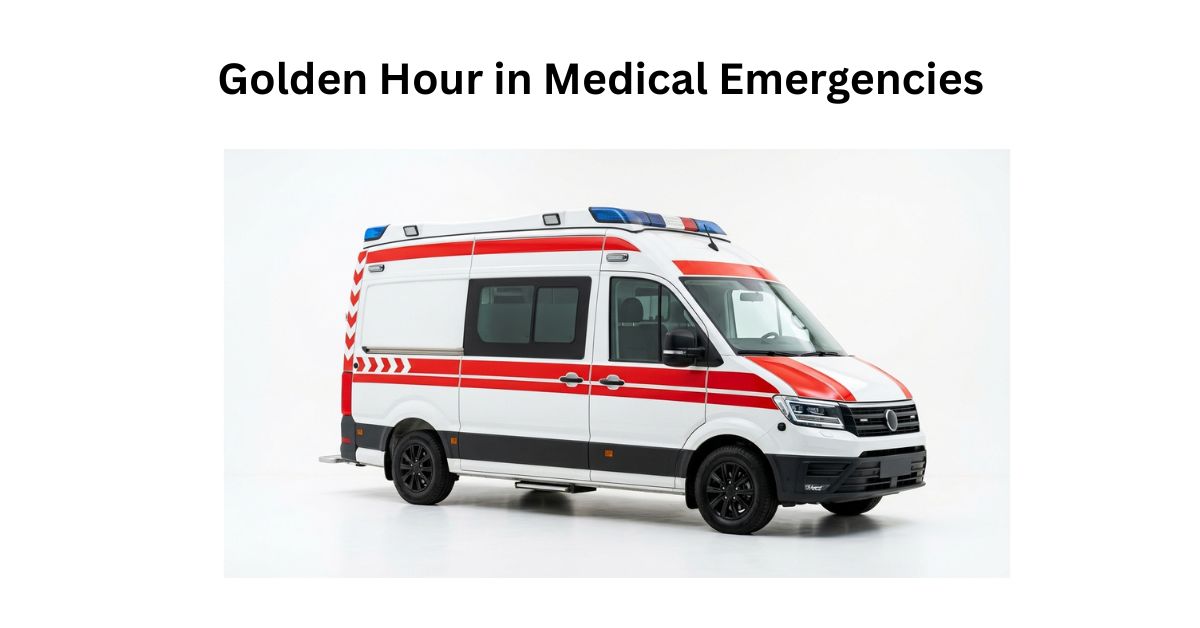
Golden Hour in Medical Emergencies: Why Ambulance Speed Saves Lives in Pakistan
📋 Table of Contents
- What Is the Golden Hour?
- Why Every Minute Matters – The Science
- Golden Hour by Emergency Type
- Golden Hour Challenges in Pakistan
- What Makes an Ambulance Fast?
- What Happens During the Golden Hour Transport
- Golden Hour Survival Statistics
- What Families Can Do to Save Golden Hour Minutes
- How to Improve Golden Hour Outcomes in Pakistan
- FAQs – Golden Hour & Ambulance Speed
- Related Articles & Services
In emergency medicine, there is a concept that has saved countless lives around the world: the golden hour. It refers to the first 60 minutes after a traumatic injury or sudden medical event — a window during which rapid, appropriate treatment can mean the difference between full recovery, permanent disability, or death.
In Pakistan, the golden hour is often lost before the patient even reaches the hospital. Traffic congestion, long distances, unclear addresses, poor ambulance availability, and delayed calls all eat into this precious window. A heart attack patient in Karachi who waits 20 minutes before calling an ambulance, then waits another 35 minutes for it to arrive, has already lost nearly an hour of golden time — before any medical care begins.
This guide explains what the golden hour is, why it matters, how it differs by emergency type, and — most importantly — what families and communities in Pakistan can do to protect those critical 60 minutes. Understanding the golden hour can save a life — perhaps someone in your own family.
⏱️ What Is the Golden Hour?
The "golden hour" is a concept in emergency medicine that emphasizes the critical importance of rapid assessment and treatment after a medical emergency. It was first popularized in trauma care, but the concept now applies to heart attacks, strokes, and other time-sensitive conditions.
Key principles of the golden hour:
- ⏰ 60-minute window: The first hour after symptom onset or injury
- 🩺 Early treatment: Rapid intervention significantly improves outcomes
- ❤️ Survival advantage: Patients treated within the golden hour have higher survival rates
- ♿ Reduced disability: Faster care means less permanent damage
- 🚑 Ambulance speed matters: Every minute saved on response time is a minute of golden time preserved
- 🏥 Hospital readiness: Pre-notification helps hospitals prepare during transport
⭐ The Golden Hour – Simple Definition
The golden hour is the first 60 minutes after a medical emergency during which rapid treatment offers the best chance of survival and full recovery.
For some conditions — like cardiac arrest — the "golden hour" is actually much shorter: the "golden minutes." For others, the window extends to a few hours. But the principle is the same: time is tissue, time is life.
🔬 Why Every Minute Matters – The Science
The science behind the golden hour is well-established. Different organs and tissues have different tolerances for oxygen deprivation, but the principle applies universally: the longer the delay, the worse the damage.
What Happens Minute-by-Minute
| Emergency | What Happens Every Minute | Impact |
|---|---|---|
| Cardiac Arrest | 10% drop in survival per minute without CPR | Brain damage begins in 3–4 min |
| Heart Attack | Heart muscle dies; irreversible damage builds | Every 30 min of delay = higher mortality |
| Stroke | 1.9 million brain cells die per minute | Brain function lost permanently |
| Severe Bleeding | Blood loss accelerates; shock develops | Death within minutes to hours |
| Respiratory Failure | Oxygen levels drop; organs starve | Brain damage in 4–6 min without oxygen |
| Trauma (Head Injury) | Brain swelling and bleeding continue | Permanent disability risk increases |
| Neonatal Emergency | Newborn's fragile physiology deteriorates rapidly | Brain damage and mortality risk |
📉 Survival Rate vs Time to Treatment (Cardiac Arrest)
*Approximate survival rates for out-of-hospital cardiac arrest with CPR/AED.
🩺 Golden Hour by Emergency Type
The golden hour isn't exactly 60 minutes for every condition. Here's how it varies:
| Emergency | Critical Time Window | Key Treatment | What Ambulance Speed Saves |
|---|---|---|---|
| Cardiac Arrest | 4–6 minutes | CPR + Defibrillation | Brain function, life itself |
| Heart Attack (STEMI) | 90 minutes to PCI | Angioplasty or thrombolysis | Heart muscle, survival |
| Stroke (Ischemic) | 3–4.5 hours for thrombolysis | Clot-busting drugs or thrombectomy | Brain function, speech, mobility |
| Severe Trauma | 60 minutes | Surgery, blood transfusion | Life, limb, organ function |
| Severe Bleeding | Minutes to hours | Hemorrhage control, blood products | Life |
| Respiratory Failure | 4–6 minutes | Oxygen, ventilation | Brain function, life |
| Anaphylaxis | Minutes | Epinephrine | Life |
| Severe Hypoglycemia | Minutes to hours | Glucose administration | Brain function, consciousness |
| Heat Stroke | 30–60 minutes | Rapid cooling | Life, brain function |
| Neonatal Emergency | Minutes | Respiratory support, warmth | Life, brain development |
| Poisoning | Minutes to hours | Antidotes, supportive care | Organ function, life |
For heart attacks: The critical metric is "door-to-balloon time" — the time from hospital arrival to angioplasty. Best practice is under 90 minutes. In Pakistan, this means the ambulance must not only arrive quickly but also choose a hospital with a cath lab — and pre-notify them to be ready.
For strokes: The golden hour extends to 4.5 hours for clot-busting drugs, and up to 24 hours for thrombectomy in selected patients. But every minute still counts. Brain cells die at 1.9 million per minute.
🚦 Golden Hour Challenges in Pakistan
In Pakistan, several factors eat into the golden hour before patients receive care. Understanding these challenges helps families prepare and act faster.
| Challenge | Time Lost | How to Mitigate |
|---|---|---|
| Delay in calling for help | 10–30 minutes | Recognize symptoms early; don't wait to see if it passes |
| Ambulance response time | 15–40 minutes | GPS dispatch; multiple numbers saved; pre-planning |
| Traffic congestion | 10–20 minutes | Emergency driving; alternate routes; motorway coordination |
| Unclear address | 5–15 minutes | Share Google Maps pins; clear landmarks; guide the driver |
| Security gates | 2–5 minutes | Pre-clear ambulance access; alert building security |
| Hospital not ready | 10–20 minutes | Choose hospital with right capability; ambulance pre-notification |
| Wrong hospital choice | 20–40 minutes | Know which hospitals have which specialties; dispatcher advice |
| Waiting for test results before calling | 30+ minutes | Call first; tests can be done at hospital |
| Attempting home remedies first | 15–30 minutes | Call ambulance first; no home remedies for emergencies |
| Driving to hospital yourself | Variable; often longer than ambulance | Ambulances get priority and provide care en route |
📊 Where Golden Hour Time Goes in Pakistan
*Realistic breakdown for a Pakistani urban emergency. The golden hour is often exceeded.
🚑 What Makes an Ambulance Fast?
Ambulance speed isn't just about driving fast — it's about the entire system working efficiently. Here's what determines how quickly help reaches you.
| Factor | Impact on Speed | How Insaf Ambulance Addresses It |
|---|---|---|
| GPS Dispatch | Identifies nearest ambulance in seconds | ✅ GPS-enabled fleet tracking |
| Pre-Positioning | Ambulances stationed where demand is high | ✅ Strategic stationing at interchanges, hospitals |
| Multiple Stations | Shorter distance to any location | ✅ Fleet positioned across cities |
| Route Optimization | Avoids traffic jams | ✅ Live traffic routing |
| Trained Drivers | Confident emergency driving | ✅ Experienced emergency drivers |
| Dispatch Efficiency | Fast call intake and assignment | ✅ 24/7 trained dispatchers |
| Hospital Coordination | Pre-notification saves hospital time | ✅ Pre-arrival hospital alerts |
| Vehicle Reliability | No breakdowns en route | ✅ Regular maintenance, backup vehicles |
| Crew Readiness | Staff ready to move immediately | ✅ 24/7 staffing |
Why GPS dispatch matters most: Traditional dispatch relies on radio calls and manual location checks. GPS dispatch identifies the nearest available ambulance in seconds, cutting 3–5 minutes off dispatch time — that's 3–5 minutes of golden hour preserved.
🩺 What Happens During the Golden Hour Transport
The ambulance is not just transporting the patient — it's providing critical care during the golden hour. Here's what happens en route:
- 🫁 Oxygen therapy: Maintains oxygen to brain and organs
- 📈 Cardiac monitoring: Detects arrhythmias immediately
- ⚡ Defibrillation: For cardiac arrest or dangerous rhythms
- 💊 Medications: Aspirin for heart attack, glucose for hypoglycemia, epinephrine for anaphylaxis
- 💉 IV access: For medications and fluids
- 🩸 Bleeding control: Pressure dressings, tourniquets
- 🫁 Airway management: Suction, intubation if needed
- 🧠 Neurological monitoring: Consciousness, pupils, response
- 📞 Hospital pre-notification: So the receiving team is ready
- 📋 Documentation: Recording vitals and interventions
For a heart attack, the paramedic can perform a 12-lead ECG en route and transmit results to the receiving hospital. For a stroke, they can note the exact time of onset and alert the stroke team. For a trauma patient, they can initiate spinal immobilization and bleeding control. These are golden hour interventions that happen before the hospital doors.
📊 Golden Hour Survival Statistics
Research from around the world clearly demonstrates the survival benefit of rapid ambulance response and treatment within the golden hour.
| Condition | Time Window | Survival Impact |
|---|---|---|
| Cardiac Arrest | 4–6 minutes to CPR/AED | Survival can drop from 50%+ to under 10% with delay |
| Heart Attack (STEMI) | 90 minutes to PCI | Mortality doubles if door-to-balloon > 90 min |
| Stroke (Ischemic) | 4.5 hours to thrombolysis | Each 15-min delay = 1 month of healthy life lost |
| Trauma (Hemorrhage) | 60 minutes | Golden hour treatment significantly improves survival |
| Anaphylaxis | Minutes to epinephrine | Death can occur within 5–15 minutes if untreated |
| Heat Stroke | 30 minutes to cooling | Mortality can exceed 80% if cooling delayed over 1 hour |
| Severe Hypoglycemia | Minutes to hours | Permanent brain damage possible with prolonged hypoglycemia |
⭐ The Impact of 10 Minutes
For a cardiac arrest patient: 10 minutes of delay can mean the difference between 50% survival and under 10% survival.
For a stroke patient: Every 15 minutes of delay costs approximately one month of healthy life.
For a trauma patient: 10 minutes can mean the difference between surgery and death.
This is why ambulance speed is not just convenience — it's a life-saving medical intervention.
👨👩👧 What Families Can Do to Save Golden Hour Minutes
Families are the first link in the golden hour chain. What you do — or don't do — in the first minutes after an emergency can save or lose critical time.
2. Call immediately: Do not "wait to see if it passes." Call +92 329 8041122 or 1122 right away.
3. Save multiple numbers: Have Insaf Ambulance, 1122, Edhi (115), Chhipa (1020) saved on every phone.
4. Give exact location: House number, street, area, landmark — and send a WhatsApp location pin.
5. Describe symptoms clearly: "Chest pain, sweating" or "Face drooping, slurred speech" — this triggers the right ambulance dispatch.
6. Send someone to guide the ambulance: A person at the main road saves 5–10 minutes.
7. Have documents ready: CNIC, medical reports, medications.
8. Note the time of onset: Critical for stroke and cardiac treatment decisions.
9. Give basic first aid: CPR if not breathing, pressure for bleeding, aspirin for heart attack (if not allergic).
10. Choose the right hospital: Stroke-ready for stroke, cath lab for heart attack, trauma center for accidents.
11. Clear the pathway: Open doors, move furniture, unlock gates.
12. Do not drive yourself: Ambulances get priority and provide care en route.
🚀 How to Improve Golden Hour Outcomes in Pakistan
Improving golden hour outcomes in Pakistan requires action at multiple levels — individual, community, and system-wide.
Individual Level
- 📞 Save emergency numbers on every family member's phone
- 🎓 Learn CPR and basic first aid
- 🏥 Know your nearest hospitals and their specialties
- 📱 Use Google Maps pins when calling
- 🩺 Recognize warning signs of common emergencies
- 📋 Keep medical information ready for each family member
- 🚗 Plan routes to hospitals in advance
Community Level
- 🏢 AEDs in public places: Malls, schools, offices, apartment buildings
- 🎓 Community CPR training: Public awareness campaigns
- 🚑 First responder networks: Neighbors trained in basic life support
- 📞 Emergency number awareness: Mosque announcements, posters
- 🏥 Hospital capacity transparency: Public info about which hospitals are prepared for which emergencies
- 🚦 Ambulance etiquette: Public education on giving way
System Level
- 🚑 Fleet expansion: More ambulances, especially ICU-equipped
- 🛰️ GPS dispatch nationwide: Every ambulance service should use GPS dispatch
- 📞 Unified emergency number: Single number for police, fire, ambulance
- 🏥 Hospital pre-notification systems: Standard protocol for ambulances to alert receiving hospitals
- 🚦 Traffic signal priority: Ambulances trigger green lights en route
- 🎓 Standardized paramedic training: Ensure all EMTs and paramedics meet minimum standards
- 📊 Public response time data: Transparency drives improvement
- 📱 App-based booking: Reduce call time
- 🚁 Air ambulance expansion: For critical rural cases
- 💰 Insurance coverage: Mandate ambulance coverage in health insurance
❓ Frequently Asked Questions – Golden Hour & Ambulance Speed
1. What exactly is the "golden hour"?
The golden hour is the first 60 minutes after a medical emergency during which rapid treatment offers the best chance of survival and full recovery. It's not always exactly 60 minutes — for cardiac arrest, the critical window is 4–6 minutes; for stroke, it's up to 4.5 hours for clot-busting drugs. But the principle is that rapid care saves lives.
2. Why is ambulance speed so important in Pakistan?
Pakistan's traffic congestion, long distances, and delayed emergency calls often mean the golden hour is lost before patients reach the hospital. A 35-minute ambulance response plus 20 minutes of family delay leaves only a few minutes of golden hour. Ambulance speed directly determines how much of the golden hour is preserved for life-saving treatment.
3. How much does ambulance delay affect survival?
For cardiac arrest, survival drops 10% per minute without CPR. For stroke, 1.9 million brain cells die per minute. For heart attack, every 30 minutes of delay significantly increases mortality. For trauma, the golden hour matters most for internal bleeding. In every case, ambulance speed is directly tied to survival.
4. What can I do to help save the golden hour in an emergency?
Recognize the emergency quickly, call an ambulance immediately (don't "wait and see"), give exact location with a Google Maps pin, send someone to guide the ambulance to your building, start CPR if the person isn't breathing, note the time of onset, and choose the right hospital. Do NOT drive yourself — ambulances provide care en route and pre-notify hospitals.
5. What makes a difference between 15-minute and 35-minute ambulance response?
Everything. For a heart attack, 20 extra minutes means more heart muscle dies. For a stroke, 20 extra minutes means 38 million more brain cells lost. For trauma, 20 extra minutes could mean bleeding out. That's why GPS dispatch, strategic pre-positioning, and multiple ambulances matter — they save minutes, and minutes save lives. Call +92 329 8041122 for the fastest possible response.
🔗 Related Articles & Our Ambulance Services
Our Services:
🚑 Ambulance Service in Pakistan✈️ Airport Ambulance Service
🎪 Event Medical Coverage Pakistan
🏥 ICU Ambulance Service
Helpful Articles:
🚗 Road Safety in Pakistan: How to Help After an Accident Without Making It Worse🆓 Free Ambulance Services in Pakistan: Complete List (Edhi, Chhipa, 1122)
🚦 Ambulance Etiquette in Pakistan: How to Make Way for Emergency Vehicles
🌡️ Heatwave Medical Emergencies in Pakistan: How Ambulance Services Respond
⏱️ Every minute counts. Every second matters. Call now.
📞 Call: +92 329 8041122 💬 WhatsApp UsICU, Oxygen, ALS & Patient Transport ambulances — GPS dispatch, rapid response, 24/7 across Pakistan.
© Insaf Ambulance Services – Rapid, Reliable, and Compassionate Emergency Care Across Pakistan.