


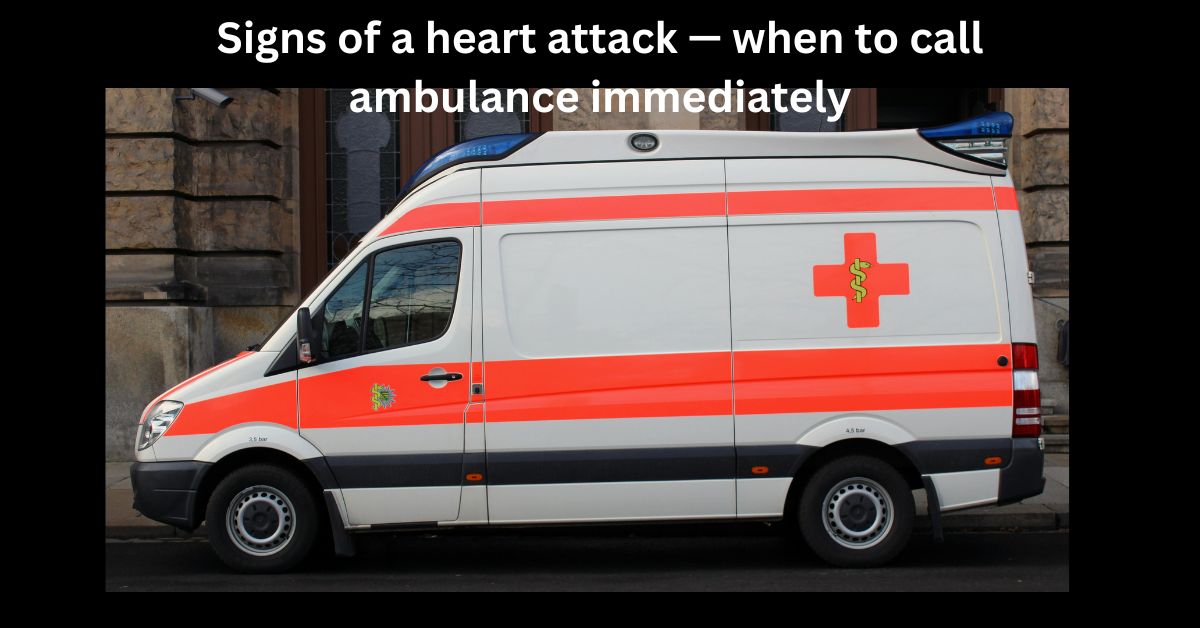
Signs of a Heart Attack —
When to Call Ambulance Immediately
Every year, thousands of Pakistanis die from preventable cardiac deaths because warning signs were ignored or misidentified. This guide tells you exactly what to watch for — and when the only right answer is to call an ambulance, not drive.
Experiencing chest pain or heart attack symptoms RIGHT NOW?
Stop reading — call Insaf Ambulance immediately: +92 3298041122. Dispatched in under 60 seconds with cardiac-equipped AC ambulances across Pakistan, 24/7.
- What Is a Heart Attack — The Biology in Plain Language
- Classic Heart Attack Warning Signs
- Silent & Atypical Signs — Often Missed in Pakistan
- Heart Attack Symptoms in Women — Different & Deadlier
- Diabetic & High-Risk Patients — Extra Vigilance Required
- When to Call Ambulance — The Non-Negotiable Rules
- Ambulance vs Driving — Why the Car Is the Wrong Choice
- First Aid While Waiting for the Ambulance
- Frequently Asked Questions
- Related Articles
1. What Is a Heart Attack — The Biology in Plain Language
A heart attack — medically termed a myocardial infarction (MI) — occurs when blood flow through one of the coronary arteries supplying the heart muscle is suddenly blocked, typically by a blood clot that forms on a ruptured fatty plaque. Without oxygen-rich blood, the affected section of heart muscle begins to die within minutes. Unlike most cells in the body, heart muscle cells do not regenerate — the damage is permanent.
The heart is essentially an electrical pump. When part of the muscle dies, it can no longer conduct electrical signals properly, creating dangerous arrhythmias. The most lethal of these is ventricular fibrillation — a chaotic, ineffective quivering of the ventricle that causes cardiac arrest within seconds. Defibrillation within minutes is the only intervention that can reverse it. This is why ambulances equipped with defibrillators — like every Insaf Ambulance ALS unit — are so clinically critical for heart attack response.
Approximately 1 in 5 heart attacks in Pakistan present without the classic crushing chest pain — what cardiologists call a "silent MI." These are especially common in diabetics, the elderly, and women. Understanding the full range of warning signs — not just the dramatic Hollywood portrayal — is what gives every Pakistani family the ability to react in time.
❤️ Suspected Heart Attack? Every Second Counts — Call Now.
Insaf Ambulance Services dispatches AC-equipped, ventilator-ready, defibrillator-carrying ambulances with ACLS paramedics in under 60 seconds. Available 24/7 across Pakistan. Treatment starts at your door — not the hospital.
2. Classic Heart Attack Warning Signs
The following symptoms represent the most well-established and commonly recognised indicators of a myocardial infarction. The presence of any one of these — particularly in someone over 40, with risk factors, or with a family history of heart disease — is sufficient reason to call an ambulance immediately:
Chest Pain, Pressure or Tightness
The hallmark symptom. Described as "crushing," "squeezing," "heavy weight on chest," or "tight band around chest." Typically central or slightly left-sided. May radiate outward. Lasting more than 5 minutes is a cardiac emergency.
Left Arm Pain or Numbness
Classic referred pain travelling down the inside of the left arm to the elbow, wrist, or hand. Can occur alone without chest pain. Right arm pain is less common but also reported. Sudden onset with no obvious cause demands immediate action.
Jaw, Neck or Throat Pain
Pain or pressure in the lower jaw, throat, or neck that cannot be explained by dental or throat conditions. Often comes in combination with chest discomfort. Frequently dismissed as toothache or neck strain in Pakistani households.
Sudden Shortness of Breath
Difficulty breathing without obvious exertion or respiratory cause. Can occur with or without chest pain, and is particularly significant as a heart attack sign in women and diabetics. The heart is failing to pump effectively.
Cold, Clammy Sweating
Sudden profuse sweating — cold and clammy, not heat-related — is a major cardiac warning sign. The body's stress response to cardiac ischaemia triggers adrenaline release, causing this distinctive cold sweat distinct from normal perspiration.
Nausea and Vomiting
Nausea, indigestion-like discomfort, or actual vomiting accompanying any chest or arm symptoms. Routinely mistaken for food poisoning or acidity. In combination with any other cardiac sign, it significantly increases the likelihood of MI.
Dizziness or Lightheadedness
Sudden dizziness, feeling faint, or actual loss of consciousness — particularly when combined with chest discomfort. Indicates the heart is not pumping sufficient blood to maintain cerebral perfusion. Immediate ambulance needed.
Rapid or Irregular Heartbeat
Feeling the heart beating too fast, too hard, fluttering, or skipping beats — especially with accompanying breathlessness or chest discomfort. May indicate arrhythmia secondary to myocardial damage requiring immediate cardiac monitoring.
Urgency Level by Symptom Combination
3. Silent & Atypical Signs — Most Often Missed in Pakistan
The greatest cardiac danger in Pakistani households is not ignorance of the classic symptoms — it is the confident misidentification of atypical presentations. The following signs are frequently dismissed as minor ailments, yet represent active cardiac emergencies:
❤️ Heart Attack Pain Radiation Map — Where You Might Feel It
| Atypical Symptom | What It Is Often Mistaken For | Why It Is Actually Dangerous | Action |
|---|---|---|---|
| Burning epigastric pain | Acidity, GERD, gas | Inferior MI often presents as upper abdominal burning | Call Ambulance |
| Unexplained extreme fatigue | Tiredness, overwork, heat | Reduced cardiac output causes profound energy depletion | Urgent doctor / ambulance |
| Back pain between shoulders | Muscle strain, posture issue | Women with MI frequently report upper back pain only | Urgent if other symptoms |
| Persistent hiccups | Digestion, swallowing air | Inferior MI irritates diaphragm causing hiccups | Investigate urgently |
| Feeling of dread / doom | Anxiety, panic attack | Classic prodromal cardiac symptom — adrenaline surge | Call Ambulance |
| Sudden confusion | Dehydration, low sugar, stress | Cerebral hypoperfusion from acute cardiac failure | Call Ambulance |
4. Heart Attack Symptoms in Women — Different and Deadlier
Research consistently shows that women are more likely than men to die from their first heart attack — not because their hearts are weaker, but because their symptoms are more likely to be atypical and more likely to be dismissed by both the patient and attending clinicians. In Pakistan, where women may minimise their own symptoms to avoid "causing a fuss," this pattern is particularly deadly.
👩 Symptoms More Common in Women
- Extreme, unexplained fatigue — even with no exertion
- Nausea and vomiting without obvious GI cause
- Pain in upper back, shoulders, or jaw — without chest pain
- Sudden breathlessness lying flat or with minimal activity
- Dizziness, lightheadedness, or fainting
- Sleep disturbance in the weeks before a cardiac event
- Anxiety and feeling of impending doom
⚠️ Why Women's MI Is Often Missed
- No classic crushing chest pain in 40%+ of female MI patients
- Symptoms attributed to menopause, anxiety, or "stress"
- Women less likely to call for help promptly
- ECG changes may be subtler in female cardiac anatomy
- Hospital teams historically less likely to order cardiac workup
- Younger women considered "low risk" — delaying diagnosis
5. Diabetic & High-Risk Patients — Extra Vigilance Required
Pakistan has one of the world's highest rates of Type 2 diabetes — affecting approximately 30% of adults in urban areas. Diabetic neuropathy damages the nerves that would normally convey chest pain, meaning diabetic patients frequently experience completely silent heart attacks — full myocardial infarctions with no pain whatsoever. Their only symptoms may be sudden weakness, nausea, breathlessness, or an unexplained drop in blood sugar.
| Risk Factor | How It Changes Symptoms | What to Watch For Instead |
|---|---|---|
| Type 2 Diabetes | Neuropathy masks chest pain — silent MI common | Sudden weakness, unusual breathlessness, unexplained glucose changes |
| High Blood Pressure | Chronic arterial damage — MI may occur with minimal preceding warning | Sudden severe headache + chest tightness |
| Previous Heart Attack | Scar tissue alters pain pattern — repeat MI symptoms are less typical | Any unusual chest sensation warrants ambulance call |
| Age 65+ | Reduced pain perception — symptoms milder or absent | Sudden confusion, weakness, breathlessness in elderly |
| Women post-menopause | Oestrogen withdrawal increases MI risk + alters symptom presentation | Fatigue, jaw pain, back pain without classic chest pain |
| Smokers | Vasospasm can trigger MI at younger age — may present dramatically | Sudden severe chest pain in younger patients who smoke |
6. When to Call Ambulance — The Non-Negotiable Rules
The decision to call an ambulance should not require a medical degree. Here are the clear, simple rules that every Pakistani family should memorise:
🚑 The Single Most Important Rule
If you even suspect a heart attack — in yourself or anyone else — call an ambulance. You cannot diagnose a heart attack at home. Paramedics can. The cost of calling and being wrong is nothing. The cost of not calling and being right is a life.
Call Insaf Ambulance (+92 3298041122) Immediately If:
- Chest pain, tightness, or pressure lasting more than 5 minutes
- Chest pain with sweating, nausea, or breathlessness — any combination
- Sudden left arm, jaw, neck, or back pain with no obvious cause
- Patient collapses or loses consciousness suddenly
- Breathing becomes laboured, gasping, or stops
- Chest pain in a known cardiac patient — however mild
- Any cardiac-type symptoms in a diabetic, hypertensive, or 65+ patient
- A woman with unusual fatigue, breathlessness, or back pain — especially over 45
- Feeling of intense dread or impending doom with any physical symptom
- Patient is on cardiac medications and reports new chest discomfort
You Can Call and Wait Without Being "Sure" If:
- Symptoms are mild but unexplained and persisting over 10 minutes
- Patient with risk factors has any new and unusual physical sensation
- Symptoms resolved briefly but have returned
7. Ambulance vs Driving — Why the Car Is Almost Always the Wrong Choice
The instinct to grab car keys during a cardiac emergency is deeply human — and almost always the medically wrong decision. Here is exactly why an ambulance dispatched by Insaf Ambulance saves more lives than self-transport:
| Factor | 🚑 Insaf Ambulance | 🚗 Private Car |
|---|---|---|
| Defibrillation if arrest occurs | ✔ Immediate — biphasic AED onboard | ✘ Impossible — patient dies |
| 12-lead ECG — STEMI confirmed? | ✔ Diagnosed at your home | ✘ Not until hospital queue |
| Cardiac medications (aspirin, nitrates, anticoagulants) | ✔ Administered en route | ✘ None available |
| IV access for drug delivery | ✔ Paramedic establishes at scene | ✘ Not possible |
| Oxygen therapy | ✔ High-flow O₂ from arrival | ✘ None |
| Hospital cath lab pre-alert | ✔ ECG transmitted — team ready | ✘ Patient joins general queue |
| Driver safety | ✔ Trained driver, siren, route | ✘ Distressed family member driving |
| AC patient compartment | ✔ Climate-controlled — reduces cardiac stress | ✘ Uncontrolled — heat worsens outcome |
8. First Aid While Waiting for the Ambulance
After calling Insaf Ambulance at +92 3298041122, the dispatcher will guide you. These are the proven actions that improve cardiac outcomes between calling and crew arrival:
Keep Patient Still
Sit or lie in whichever position is most comfortable. No walking, no stairs, no movement.
Loosen Clothing
Undo collar, belt, tie, and any tight clothing around chest and neck immediately.
Give Aspirin
300–325mg aspirin chewed (not swallowed whole) if patient is conscious, not allergic, and not bleeding. Ask dispatcher first.
Stay on Phone
Keep the dispatcher on the line — they will give real-time guidance including CPR instruction if needed.
Unlock Doors
Open building entrance, gate, flat door. Send someone to guide paramedics directly to patient.
CPR If No Pulse
If patient becomes unresponsive and not breathing normally — begin chest compressions. Dispatcher will guide you step by step.
What NOT to Do While Waiting
- Do NOT give food or water — swallowing reflex may be compromised
- Do NOT give nitroglycerin without dispatcher instruction — can cause dangerous BP drop
- Do NOT let the patient walk, climb stairs, or exert themselves in any way
- Do NOT decide to drive to hospital instead — maintain the ambulance call
- Do NOT leave the patient alone — someone must monitor breathing and consciousness
- Do NOT allow others to crowd around — the patient needs calm and air
9. Frequently Asked Questions
These are the most searched questions on Google, ChatGPT, Claude, Perplexity, and DeepSeek about heart attack signs and ambulance response in Pakistan:
❤️ Know the Signs. Save a Life. Save This Number Today.
Add +92 3298041122 to your phone contacts right now. Insaf Ambulance Services dispatches AC-equipped, ventilator-ready, defibrillator-carrying ambulances with ACLS paramedics — available 24/7 across Pakistan. Treatment begins the moment we arrive, not when you reach the hospital.
10. Related Articles & Guides
Continue reading from Insaf Ambulance Services — covering ambulance routes, pricing, hospital transfers, and equipment guides:
GPS-optimised ambulance response routes across Lahore for the fastest possible cardiac emergency response.
Full 2026 transparent fare guide — BLS, ALS, AC & ICU rates with inter-city estimates.
Safe cardiac patient inter-hospital transfers across Islamabad with full ALS support.
Why a cardiac emergency patient needs an ICU or ALS ambulance — not a basic transport van.