


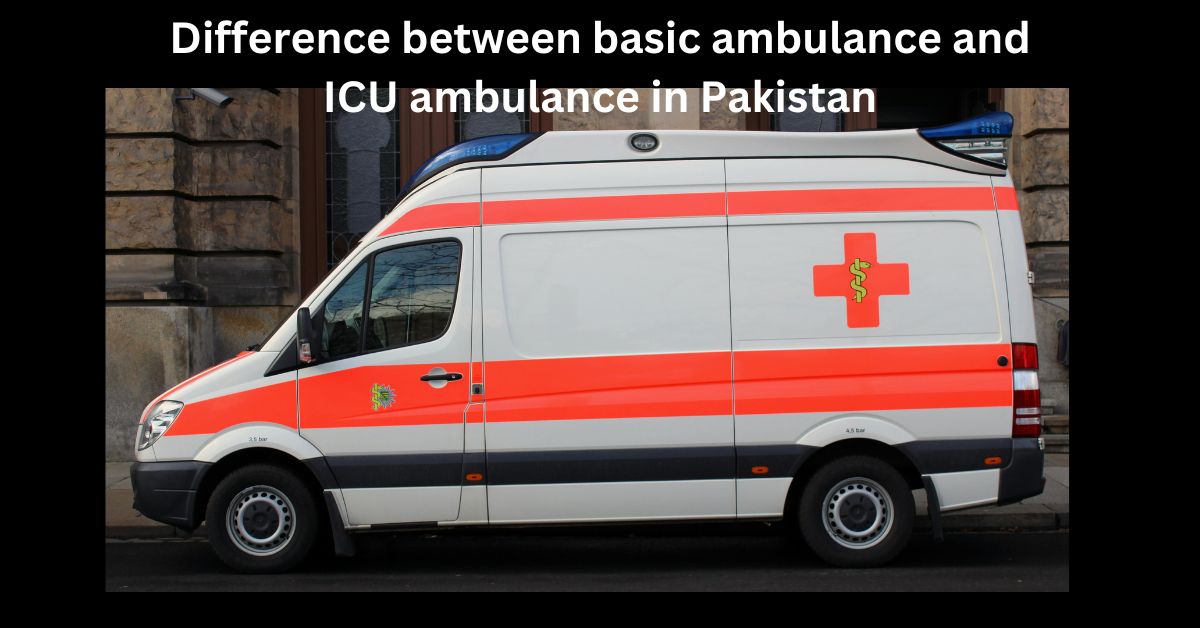
Difference Between Basic Ambulance and ICU Ambulance in Pakistan
In Pakistan, ambulance services range from simple patient transport vehicles to mobile intensive care units. Choosing the wrong type can compromise patient safety — a basic ambulance lacks ventilators and advanced monitoring for critically ill patients, while an ICU ambulance is overkill for a stable discharge. This guide explains the clear differences between basic ambulances (often called BLS) and ICU ambulances (equipped with ventilators, infusion pumps, and critical care paramedics). We also cover intermediate ALS (Advanced Life Support) options and transparent pricing: 80 PKR/km for BLS, 100 PKR/km for ALS, and 120 PKR/km for ICU ambulances, with a special intercity discount of 80 PKR/km for distances over 300 km.
Whether you're a family member arranging a hospital transfer, a medical professional, or a caregiver, understanding these differences ensures you request the right vehicle for the patient's condition. Let's break down the equipment, staffing, cost, and use cases for each ambulance type in Pakistan.
📖 Table of Contents
- 1. What is a Basic Ambulance (BLS)?
- 2. What is an ICU Ambulance?
- 3. Side-by-Side Comparison Table
- 4. Equipment Differences Explained
- 5. Staffing: Paramedic vs. Critical Care Nurse
- 6. Cost Comparison (80-120 PKR/km)
- 7. When to Choose Each Ambulance Type
- 8. Intercity Transfers & Discount Policy
- 9. Frequently Asked Questions
- 10. Related Ambulance Services
🚐 What is a Basic Ambulance (BLS) in Pakistan?
A Basic Life Support (BLS) ambulance is designed for non-critical or stable patients who require stretcher transport, basic monitoring, and minimal medical intervention. These ambulances are commonly used for hospital discharge, dialysis appointments, routine check-ups, or transferring stable patients between facilities. In Pakistan, basic ambulances typically include:
- Stretcher with safety straps
- Oxygen cylinder with flowmeter
- First aid kit and basic bandages
- Air conditioning (in modern fleets like Insaf Ambulance)
- Trained first responder or EMT (not a paramedic)
Basic ambulances do NOT have cardiac monitors, defibrillators, ventilators, or infusion pumps. They are not suitable for patients with active cardiac issues, respiratory failure, or those requiring IV medications en route.
🫁 What is an ICU Ambulance (Ventilator Ambulance) in Pakistan?
An ICU ambulance — also called a mobile ICU or ventilator ambulance — is a fully equipped critical care transport unit. It functions as a portable intensive care unit, allowing critically ill patients to be transferred safely between hospitals or from home to a tertiary care center. Insaf Ambulance's ICU vehicles include:
- Portable mechanical ventilator (invasive and non-invasive modes)
- Multi-parameter cardiac monitor (ECG, SpO2, NIBP, EtCO2)
- Defibrillator with pacing capability
- Infusion pumps (syringe and volumetric)
- Suction unit and advanced airway equipment
- Emergency drug box (sedatives, vasopressors, antiarrhythmics)
- Critical care paramedic or nurse on board
- Air conditioning and power backup
ICU ambulances are mandatory for patients on ventilators, those with unstable vital signs, severe head trauma, or post-cardiac arrest. They also serve as neonatal ICU transport when equipped with an incubator (available on request).
📊 Side-by-Side Comparison: Basic vs. ALS vs. ICU Ambulance
| Feature | Basic (BLS) | Advanced (ALS) | ICU (Ventilator) |
|---|---|---|---|
| Stretcher | ✅ Standard | ✅ Standard | ✅ ICU stretcher with scoop |
| Oxygen | ✅ Cylinder | ✅ High-flow | ✅ Dual cylinders + concentrator |
| Cardiac Monitor | ❌ No | ✅ ECG, SpO2, NIBP | ✅ Multi-parameter + EtCO2 |
| Defibrillator | ❌ No | ✅ AED/manual | ✅ Advanced with pacing |
| Ventilator | ❌ No | ❌ No | ✅ Portable ICU ventilator |
| Infusion Pumps | ❌ No | ✅ Basic IV drip only | ✅ 2-4 infusion pumps |
| Paramedic/Nurse | EMT/First responder | Paramedic | Critical care paramedic or nurse |
| AC | ✅ Yes | ✅ Yes | ✅ Yes (heavy-duty) |
| Rate (PKR/km)* | 80 | 100 | 120 |
*Pricing note For distances over 300 km between cities, all models are charged at the flat BLS rate of 80 PKR/km.
🩺 Equipment Differences Explained (Why ICU Matters)
The single biggest difference. ICU ambulances have portable ventilators that can support patients with respiratory failure, ARDS, or neurological conditions. Basic ambulances cannot provide mechanical breaths.
ALS and ICU ambulances can detect arrhythmias and deliver shocks. Basic ambulances cannot — critical for heart attack or cardiac arrest patients.
ICU vehicles can precisely deliver life-saving drugs (dopamine, sedatives, insulin). Basic ambulances lack this capability.
👨⚕️ Staffing: EMT vs. Paramedic vs. Critical Care Nurse
The level of medical training on board varies significantly:
- Basic ambulance: Emergency Medical Technician (EMT) or first responder – trained in basic first aid, CPR, and oxygen administration.
- ALS ambulance: Paramedic – trained in advanced airway management, IV insertion, defibrillation, and medication administration.
- ICU ambulance: Critical care paramedic or registered nurse with ICU experience – can manage ventilators, titrate vasoactive drugs, and interpret complex rhythms.
For long-distance ICU transfers, Insaf Ambulance includes a second attendant to prevent fatigue and ensure continuous monitoring.
💰 Cost Comparison: Basic vs. ICU Ambulance (PKR per km)
Insaf Ambulance maintains transparent per-kilometer pricing. The table below shows typical costs for local transfers within a city (distance ≤ 50 km).
While ICU ambulances cost 50% more per km than basic, they include life-saving equipment that can be the difference between life and death for critical patients. Insaf Ambulance does not charge extra for waiting time (first 30 minutes).
⚖️ When to Choose Basic Ambulance vs. ICU Ambulance
- Patient is conscious, breathing normally, stable vitals.
- Transfer for a doctor's appointment or dialysis.
- Hospital discharge to home (no active medical needs).
- Wheelchair or stretcher transport only.
- Patient is on a ventilator or requires respiratory support.
- Unstable vital signs (low BP, irregular heart rhythm).
- Post-cardiac arrest, severe head trauma, or stroke.
- Requires continuous IV infusions (sedation, blood pressure support).
- Neonatal transport (incubator equipped).
If you're unsure, call Insaf Ambulance dispatch. Our team can ask simple questions about the patient's condition and recommend the appropriate vehicle.
🛣️ Intercity Transfers & Discount Policy (>300 km)
For long-distance transfers between Pakistani cities (e.g., Islamabad to Karachi, Rawalpindi to Quetta, Peshawar to Lahore), the distance often exceeds 300 km. In such cases, Insaf Ambulance applies a flat rate of 80 PKR/km for ALL ambulance types. This makes ICU ambulance transfers surprisingly affordable for long journeys. Example: A patient needing ventilator support from Islamabad to Karachi (1,450 km) would normally cost 174,000 PKR at ICU rate, but with the discount, it's only 116,000 PKR. Always ask the dispatcher to confirm the discount when booking.
❓ Frequently Asked Questions: Basic vs. ICU Ambulance in Pakistan
📚 Related Ambulance Services & Guides
Explore more resources from Insaf Ambulance:
- 🚑 Ambulance near PIMS Islamabad – Fastest route guide
- 🫁 Ventilator Ambulance in Rawalpindi/Islamabad
- 🏥 Hospital Transfer Ambulance in Islamabad
- ❤️ CPR Guide for Pakistanis – Save a Life
🔗 Main website: Insaf Ambulance Services | 24/7 Contact Page