


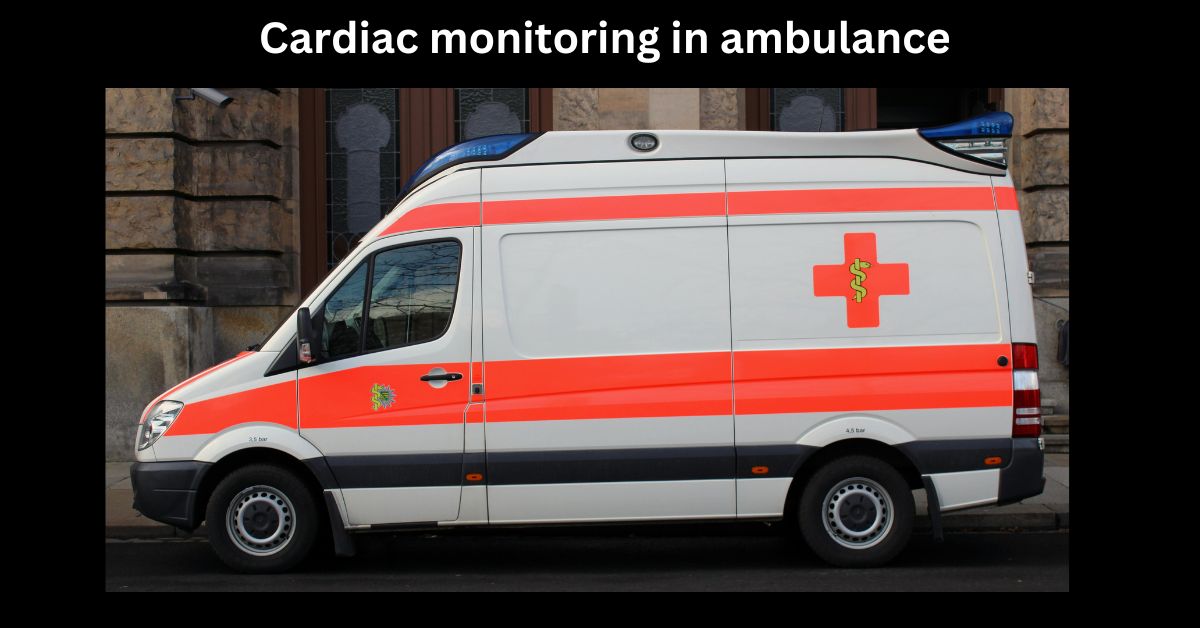
Cardiac Monitoring in Ambulance
— How It Works & Why It Matters
Most Pakistanis assume a heart attack patient needs to reach the hospital before any cardiac assessment begins. The truth is more powerful — and more urgent. Modern ambulance cardiac monitoring means the ECG is running, the defibrillator is ready, and the hospital cath lab is on standby before the vehicle even leaves your street.
- Why Cardiac Monitoring in Ambulances Is Life-Critical in Pakistan
- The 6 Core Cardiac Monitoring Devices in Every Insaf Ambulance
- The 12-Lead ECG — How It Works and What It Finds
- Defibrillator & Pacing — When and How It's Used
- Cardiac Rhythms Detected — From Normal to Life-Threatening
- ECG Transmission to Hospital — Pre-Arrival Cath Lab Activation
- Which Medical Conditions Require In-Ambulance Cardiac Monitoring
- Monitored vs Unmonitored Transport — The Outcome Difference
- Frequently Asked Questions
- Related Articles
1. Why Cardiac Monitoring in Ambulances Is Life-Critical in Pakistan
Pakistan has one of Asia's highest rates of cardiovascular disease — driven by a population with extremely high rates of hypertension, uncontrolled diabetes, widespread smoking, sedentary lifestyles, and a diet high in saturated fat and sodium. The WHO estimates that cardiovascular disease accounts for approximately 36% of all deaths in Pakistan annually. Cardiac emergencies — heart attacks, dangerous arrhythmias, and cardiac arrest — are among the most common reasons Pakistani families call for emergency help.
Yet the majority of ambulances operating in Pakistan — government or private — carry no cardiac monitoring equipment. A patient experiencing a STEMI (the most dangerous type of heart attack, where a coronary artery is completely blocked) placed in one of these vehicles receives no ECG, no arrhythmia detection, and no defibrillation capability during transit. If the patient develops ventricular fibrillation — which occurs in approximately 80% of cardiac arrests — in a vehicle without a defibrillator, they will die before reaching the hospital. Every minute without defibrillation reduces survival by 7–10%.
Insaf Ambulance Services equipped every ALS unit with a full cardiac monitoring suite — 12-lead ECG monitor, biphasic defibrillator, continuous SpO₂ and NIBP, capnography, and real-time ECG transmission — precisely because cardiac assessment at your door and en route is what transforms ambulance transport from a taxi ride into life-saving clinical intervention. This guide explains every component of that cardiac monitoring system in plain language.
❤️ Cardiac Emergency? Our Monitoring Starts at Your Door — Not the Hospital.
Insaf Ambulance Services dispatches fully cardiac-monitored ALS ambulances with 12-lead ECG, defibrillator, and ACLS paramedics across Pakistan in under 60 seconds. 24/7.
2. The 6 Core Cardiac Monitoring Devices in Every Insaf Ambulance ALS Unit
Insaf Ambulance's cardiac monitoring suite is built around six interconnected devices that together provide a complete real-time picture of a patient's cardiovascular status throughout the emergency and transit period:
12-Lead ECG Monitor
Biphasic Defibrillator
Pulse Oximeter (SpO₂)
Non-Invasive Blood Pressure (NIBP)
Capnography (EtCO₂)
External Cardiac Pacing
3. The 12-Lead ECG — How It Works and What It Finds
The 12-lead ECG is the single most powerful pre-hospital diagnostic tool available for cardiac emergencies. Understanding what it does — and what it can reveal before hospital arrival — explains why it is the centrepiece of every Insaf Ambulance cardiac unit:
📊 Insaf Ambulance — Live Cardiac Monitor Display
| ECG Lead Group | Heart Territory Assessed | Artery at Risk | If ST Elevated — Action |
|---|---|---|---|
| Leads II, III, aVF | Inferior wall | Right coronary artery (RCA) | Inferior STEMI — cath lab alert |
| Leads V1–V4 | Anterior wall | Left anterior descending (LAD) | Anterior STEMI — highest risk |
| Leads I, aVL, V5–V6 | Lateral wall | Left circumflex (LCx) | Lateral STEMI — cath lab alert |
| All leads combined | Electrical conduction system | N/A (conduction) | Arrhythmia identification |
| Rhythm strip (continuous) | Heart rate and rhythm | N/A | V-fib, V-tach, AF, heart block |
4. Defibrillator & Pacing — When and How It's Used
The defibrillator is the most urgently critical piece of cardiac equipment in any ambulance. In Pakistan, its absence from most ambulances represents one of the most preventable causes of cardiac death:
🔴 When Defibrillation Is Used
- Ventricular Fibrillation (V-Fib): Chaotic electrical activity — the most common cardiac arrest rhythm. Defibrillation is the only effective treatment.
- Pulseless Ventricular Tachycardia (V-Tach): Rapid ventricular rhythm with no effective cardiac output. Immediate shock required.
- Both are "shockable" rhythms — identified within seconds on the cardiac monitor.
- Without defibrillation within 3–5 minutes of V-fib onset: death is near-certain.
- With defibrillation within 1 minute: up to 90% survival rate possible.
🟢 When External Pacing Is Used
- Complete Heart Block: Electrical signal from atria fails to reach ventricles — heart beats at dangerously slow rate.
- Severe Symptomatic Bradycardia: Heart rate below 40 with hypotension, not responding to atropine.
- Sinus Node Failure: Natural pacemaker stops firing — standstill or profound bradycardia.
- External pacing delivers timed electrical stimuli through defibrillator pads — forcing ventricular contraction at safe rate.
- Bridges patient to hospital permanent pacemaker implantation.
5. Cardiac Rhythms Detected — From Normal to Life-Threatening
Our paramedics interpret ECG rhythms in real time during transit. Here are the key rhythms our cardiac monitoring system detects and what happens when each is identified:
✅ Normal Sinus Rhythm
Regular rate (60–100 bpm), normal P-QRS-T complex. Heart functioning normally — monitoring continues but no intervention needed.
🚨 Ventricular Fibrillation
Chaotic, irregular, no identifiable waves. Complete loss of cardiac output. Brain injury begins in 4 minutes.
🚨 Pulseless V-Tachycardia
Fast (>150 bpm), wide-complex rhythm. No pulse — patient in cardiac arrest despite apparent electrical activity.
⚠️ Atrial Fibrillation (AF)
Irregularly irregular rhythm, no P waves. Major cause of cardioembolic stroke. Often first diagnosed on ambulance ECG.
⚠️ Complete Heart Block (3°)
P waves present but completely dissociated from QRS. Very slow ventricular rate — imminent syncope or arrest.
✅ Sinus Tachycardia
Regular rate >100 bpm with normal morphology. Often secondary to pain, fever, or blood loss rather than primary cardiac problem.
⚠️ STEMI Pattern
ST elevation ≥1mm in 2 contiguous leads. Complete coronary artery occlusion — time-critical reperfusion needed urgently.
🚨 Asystole
No electrical activity — flatline. Cardiac arrest requiring immediate CPR. Non-shockable — defibrillation not indicated.
6. ECG Transmission to Hospital — Pre-Arrival Cath Lab Activation
The most clinically powerful feature of Insaf Ambulance's cardiac monitoring system is not the ECG itself — it is the ability to transmit that ECG to the receiving hospital in real time, enabling a parallel process that dramatically reduces door-to-balloon time for STEMI patients:
Patient complains of chest pain — ambulance called
Insaf Ambulance dispatch confirmed within 60 seconds. Cardiac-equipped unit en route.
12-lead ECG performed at patient's home
10 electrodes applied. Full 12-lead tracing in under 3 minutes. Paramedic interprets within 10 minutes total.
STEMI identified — ECG transmitted to hospital
ECG sent directly to cardiology team at receiving hospital. Cath lab placed on standby activation. Team assembles.
IV access, aspirin, anticoagulant administered en route
ACLS paramedic administers aspirin, heparin, nitroglycerin, and O₂ during transit — medications begin working before hospital arrival.
Patient arrives at hospital — cath lab team assembled
Cath lab staff prepared, equipment ready, interventional cardiologist scrubbed. Direct transfer to lab — no ER queue, no repeat ECG, no registration delay.
Balloon inflation — artery reopened
Without ECG pre-alert, this same moment would occur at ~90 minutes. The 35-minute difference represents millions of cardiac muscle cells saved permanently.
7. Which Medical Conditions Require In-Ambulance Cardiac Monitoring
Not every ambulance journey requires active cardiac monitoring — but for the following conditions, it is not optional. It is the clinical baseline that determines whether the patient survives transit:
| Condition | Monitoring Required | Primary Risk During Transit | Device Most Critical |
|---|---|---|---|
| Suspected STEMI / Heart Attack | 12-lead ECG + continuous rhythm | V-fib arrest, cardiogenic shock | 12-lead ECG + defibrillator |
| NSTEMI / Unstable Angina | Continuous ECG + NIBP | Progression to STEMI or arrhythmia | Rhythm monitor + NIBP |
| Cardiac Arrest (ROSC) | Full suite continuous | Re-arrest, haemodynamic collapse | All devices active |
| Atrial Fibrillation (rapid) | Continuous ECG + NIBP | Rate-related heart failure, embolism | ECG + rhythm monitor |
| Severe Hypertension (>220 systolic) | Continuous NIBP + ECG | Aortic dissection, stroke, MI | NIBP every 5 min + ECG |
| Stroke (suspected) | ECG + NIBP + SpO₂ | AF identification — embolic source | 12-lead (AF detection) |
| Complete Heart Block | Continuous ECG + pacing ready | Asystole from bradycardia | ECG + external pacing |
| Pulmonary Embolism (suspected) | ECG + SpO₂ + NIBP | Right heart strain, arrest | 12-lead + SpO₂ |
| Post-Cardiac Surgery Transfer | Full suite + infusion monitoring | Pericardial tamponade, arrhythmia | All devices + pumps |
8. Monitored vs Unmonitored Transport — The Outcome Difference
Pakistan's most important ambulance improvement opportunity is cardiac monitoring. The comparison between a cardiac patient transported with and without active monitoring is not subtle — it is the difference between survival and preventable death:
| Scenario | 🚑 Insaf Ambulance (Monitored) | 🚗 Unmonitored Transport |
|---|---|---|
| V-Fib develops in transit | Identified within 15 sec — defibrillated within 90 sec | Not detected — CPR only — near-certain death |
| STEMI identified pre-hospital | Cath lab pre-alerted — team ready on arrival | First ECG at hospital — 25–45 min delay to cath lab |
| BP drops to 80 systolic | NIBP alarm — vasopressors administered immediately | Undetected — patient arrives in cardiogenic shock |
| SpO₂ falls to 88% | Immediate high-flow O₂ — hypoxia reversed | Undetected — silent hypoxic cardiac injury continues |
| AF with rapid rate detected | Rate control medication given — stroke risk reduced | Undetected — no medication — risk persists untreated |
| CPR quality during arrest | EtCO₂ measures perfusion — CPR technique optimised | No feedback — CPR may be inadequate — outcome worse |
9. Frequently Asked Questions
Most-searched questions on Google, ChatGPT, Claude, and Perplexity about cardiac monitoring in ambulances in Pakistan:
❤️ Cardiac Emergency? Every Second Without Monitoring Is Dangerous — Call Now.
Insaf Ambulance Services deploys Pakistan's most comprehensively cardiac-monitored ambulances — 12-lead ECG, biphasic defibrillator, SpO₂, NIBP, capnography, and ACLS paramedics — dispatched in under 60 seconds, 24 hours a day across Pakistan. Treatment starts at your door. The hospital is already prepared before you arrive.
10. Related Articles & Emergency Guides
More from Insaf Ambulance Services covering critical transfers, accessible transport, hospitals, and stroke emergency response:
Full guide to ICU ambulance transfers from Rawalpindi to Lahore — cardiac monitoring throughout the 370 km journey.
Accessible medical transport for mobility-impaired patients — including cardiac patients with mobility conditions.
Fastest cardiac-monitored ambulance to and from Holy Family Hospital, Rawalpindi.
Cardiac monitoring also detects AF — a major stroke cause. Learn the warning signs of stroke and when to call.