


🧠 Stroke Warning Signs and Emergency Response in Pakistan — Act FAST, Save a Life
Stroke is the second leading cause of death and a major cause of long-term disability in Pakistan. According to the Pakistan Stroke Society, over 350,000 people suffer from a stroke every year, and the numbers are rising due to hypertension, diabetes, and sedentary lifestyles. The most critical factor? Time. A stroke patient loses up to 1.9 million neurons per minute without treatment. Yet, many families delay calling an ambulance, often mistaking stroke symptoms for fatigue or simple weakness.
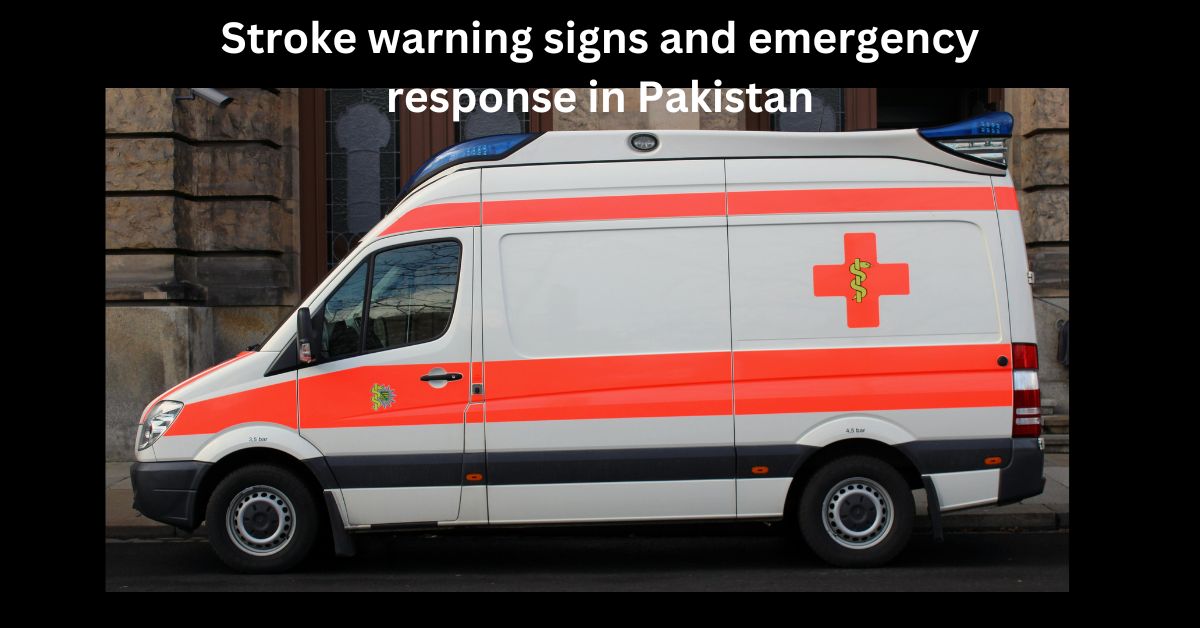
Recognizing the stroke warning signs and activating emergency response immediately can mean the difference between full recovery and permanent disability. In cities like Rawalpindi, Islamabad, Lahore, and Karachi, rapid access to an ICU ambulance equipped with oxygen, cardiac monitor, and trained paramedics is essential. Insaf Ambulance Services operates 24/7 stroke-ready ambulances across Pakistan, ensuring patients reach comprehensive stroke centers within the golden hour.
Financial concerns should never delay emergency care. Our pricing is transparent: Basic Life Support ambulance at 80 PKR/km, Advanced ICU with ventilator and stroke kit at 100–120 PKR/km. For long-distance transfers exceeding 300 km (e.g., shifting a stroke patient from a smaller city to a major hospital), the rate is just 80 PKR/km. No surge pricing, no hidden charges — just life-saving transport when you need it most.
📞 Call +92 3298041122 💬 WhatsApp Emergency
🧬 What is a Stroke? Two Main Types
A stroke occurs when blood supply to part of the brain is interrupted or reduced, preventing brain tissue from getting oxygen and nutrients. Brain cells begin to die within minutes. There are two primary types:
In both cases, immediate emergency medical response is critical. Our ICU ambulances carry clot-dissolving medications (where permitted) and can coordinate with stroke units en route.
🚨 Stroke Warning Signs – Remember FAST
The FAST test is the most reliable way to recognize a stroke. If any of these signs appear suddenly, call an ambulance immediately.
🔵 FAST – Act Quickly
F (Face drooping): Ask the person to smile. Does one side of the face droop?
A (Arm weakness): Ask them to raise both arms. Does one arm drift downward?
S (Speech difficulty): Is their speech slurred or strange? Can they repeat a simple sentence?
T (Time to call): If you see any of these signs, call +92 3298041122 immediately.
Other stroke warning signs include sudden numbness (especially on one side), confusion, trouble seeing in one or both eyes, severe headache with no known cause, and loss of balance or coordination. Even if symptoms go away quickly, it could be a transient ischemic attack (TIA) — a warning sign of a major stroke.
📋 Common Stroke Symptoms vs. Mimics
| Symptom | Stroke (Sudden onset) | Other condition |
|---|---|---|
| Face droop | One side, occurs instantly | Bell's palsy (affects eyebrow too) |
| Speech difficulty | Slurred, inappropriate words | Migraine with aura, hypoglycemia |
| Arm weakness | Sudden, unilateral | Previous injury or arthritis |
| Severe headache | Thunderclap, worst ever | Tension headache, sinusitis |
🚑 Emergency Response in Pakistan – What to Do
When you suspect a stroke, follow these steps while waiting for the ambulance:
- ✅ Call Insaf Ambulance immediately: +92 3298041122. Provide your exact location, patient’s age, and symptoms.
- ✅ Note the time when symptoms first appeared – this is crucial for tPA eligibility (within 4.5 hours).
- ✅ Lay the patient down with head slightly elevated. Do NOT give them food, water, or aspirin (unless directed by a doctor).
- ✅ Loosen tight clothing and ensure good ventilation. If unconscious, place in recovery position.
- ✅ Do not drive the patient yourself unless absolutely no ambulance is available – stroke patients need medical en route.
Our ambulances are equipped with stroke protocols: oxygen therapy, blood glucose monitoring, rapid transport to the nearest stroke-ready hospital (e.g., AFIMT Rawalpindi, PIMS Islamabad, Jinnah Hospital Lahore).
⏳ The Golden Hour – Why Every Minute Counts
The "golden hour" refers to the first 60 minutes after stroke symptom onset. During this window, medical interventions are most effective. Studies show that for every 15-minute reduction in door-to-needle time, the chance of walking independently at discharge increases by 10%. Our average response time in Rawalpindi/Islamabad is 8–12 minutes.
60–180 min: tPA can still reduce disability if given within 4.5 hours.
3-6 hours: Mechanical thrombectomy possible for large vessel occlusions.
💰 Ambulance Services for Stroke Patients – Transparent Pricing
We understand that stroke emergencies are stressful enough. Our per-kilometer pricing ensures you only pay for actual distance traveled, with no advance payment required in most cases.
| Ambulance Type | Suitability for Stroke | Rate (PKR/km) | Equipment for Stroke |
|---|---|---|---|
| Basic Life Support (BLS) | Mild symptoms, stable patient | 80 PKR | Oxygen, stretcher, blood pressure monitor |
| Advanced Stroke ICU | Sudden weakness, speech loss, unconscious | 100 PKR | Ventilator, cardiac monitor, suction, glucometer, emergency drugs |
| Critical Care (ACLS) | Severe stroke, airway compromise | 120 PKR | Defibrillator, infusion pumps, trained critical care nurse |
| Long distance >300 km | Inter-city stroke transfer | 80 PKR/km | Full ICU + rotating drivers, extra oxygen |
Example cost: Stroke patient from Rawalpindi to Lahore (280 km) using Advanced ICU = 28,000 PKR. If distance exceeds 300 km (e.g., Rawalpindi to Multan, 340 km) → only 80/km = 27,200 PKR.
🛡️ Stroke Prevention – Lifestyle Modifications
Up to 80% of strokes are preventable by controlling risk factors:
- 💊 Manage blood pressure – hypertension is the #1 cause. Keep below 130/80.
- 🍎 Healthy diet – low salt, low saturated fat, high fruits/vegetables.
- 🚭 Quit smoking – doubles stroke risk.
- 🏃 Exercise regularly – 30 mins moderate activity 5 days/week.
- 🩺 Control diabetes & cholesterol – regular checkups.
Even with prevention, always be prepared. Save our emergency number: +92 3298041122.
📞 Call +92 3298041122 📱 WhatsApp +92 3298041122 ➡️ Contact for non-emergency stroke patient transport
❓ Frequently Asked Questions – Stroke Emergency in Pakistan
🚑 Critical Care Transport Rwp to Lahore ⚡ Fast Response Ambulance – Bahria Town Rawalpindi 🚨 Ambulance Response for Road Accidents – Rawalpindi ❤️ Heart Attack Signs – When to Call an Ambulance