


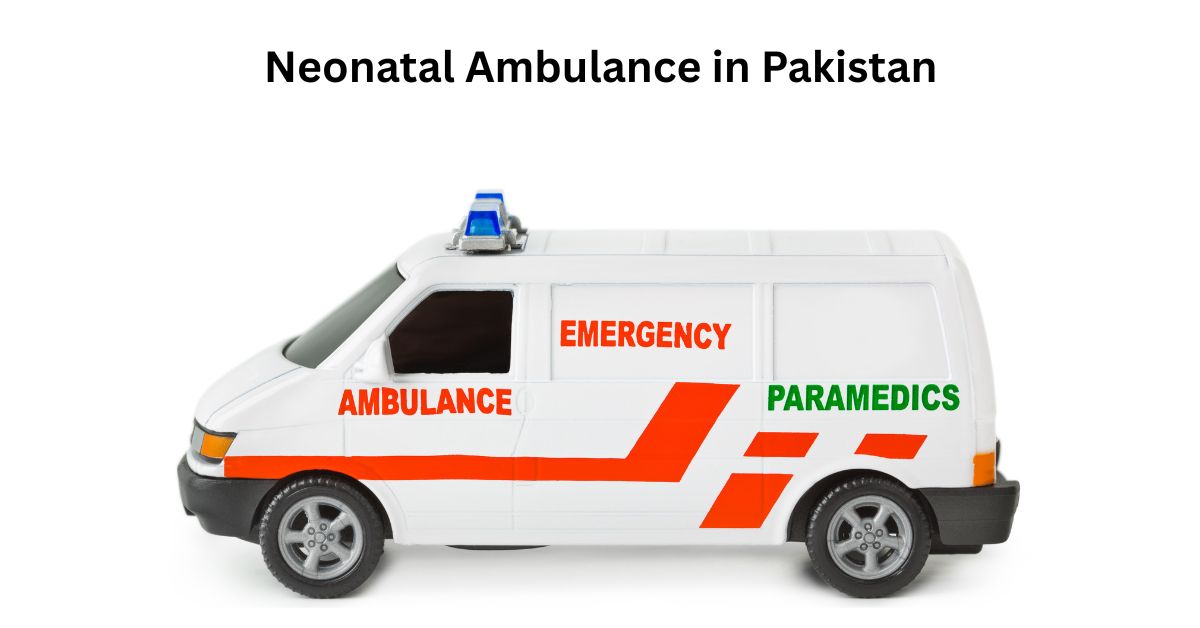
Neonatal Ambulance in Pakistan: Transporting Critically Ill Newborns
📋 Table of Contents
- What Is a Neonatal Ambulance?
- When Do Newborns Need Neonatal Transport?
- Equipment Inside a Neonatal Ambulance
- Neonatal Transport Staff
- Neonatal vs Regular ICU Ambulance
- Neonatal Ambulance Cost in Pakistan (2027)
- NICU Hospitals We Transfer To
- Risks of Neonatal Transport & How We Manage Them
- How to Book a Neonatal Ambulance
- FAQs – Neonatal Ambulance in Pakistan
- Related Articles & Services
The first hours and days of a newborn's life are the most fragile. For premature babies or those born with critical medical conditions, every minute matters. When a newborn requires specialized care available only at a higher-level hospital, the transport itself becomes a medical procedure — not just a journey.
A neonatal ambulance is a specialized mobile NICU (Neonatal Intensive Care Unit) designed to transport these fragile patients safely. It carries an incubator, neonatal ventilator, temperature control systems, cardiac monitors, and trained neonatal staff who can manage the unique physiology of newborns during transport.
In Pakistan, where many district hospitals lack advanced NICU facilities, neonatal transport is often the only way to give a critically ill newborn a chance at survival. This guide explains everything families and healthcare providers need to know about neonatal ambulance services in Pakistan.
👶 What Is a Neonatal Ambulance?
A neonatal ambulance is a highly specialized medical transport vehicle designed specifically for newborns (neonates) — typically babies under 28 days old, and especially premature infants. It functions as a mobile Neonatal Intensive Care Unit (NICU).
Core features of a neonatal ambulance:
- 🍼 Transport incubator: A temperature-controlled, enclosed environment that maintains the baby's body temperature
- 🫁 Neonatal ventilator: Specialized breathing support designed for tiny lungs
- 📈 Neonatal monitor: Tracks heart rate, respiratory rate, SpO₂, blood pressure, and temperature
- 💉 Infusion pumps: For precise delivery of medications and fluids in very small doses
- 🫁 Blended oxygen and CPAP: Precise oxygen concentration control for premature lungs
- 🔋 Onboard power: Inverter/generator to run all equipment continuously
- 🌡️ Climate control: Heated cabin to prevent hypothermia
- 🧑⚕️ Neonatal-trained staff: Nurse, doctor, or paramedic trained in newborn care
- 🩸 Blood glucose monitoring: Critical for newborns
- 💊 Emergency drug kit: Neonatal doses of resuscitation medications
⭐ Simple Definition
A neonatal ambulance is a mobile NICU on wheels. It provides the same level of intensive care that a premature or critically ill newborn would receive in a hospital NICU, but during transport between facilities.
📋 When Do Newborns Need Neonatal Transport?
Neonatal transport is needed when a baby requires a level of care that the current hospital cannot provide. Here are the most common reasons.
| Condition | Why Transport Is Needed | Urgency |
|---|---|---|
| Prematurity (under 34 weeks) | Need NICU with ventilator and specialized care | 🔴 Critical |
| Very Low Birth Weight (under 1,500g) | Require incubator and specialized feeding support | 🔴 Critical |
| Respiratory Distress Syndrome | Need surfactant therapy and neonatal ventilator | 🔴 Critical |
| Birth Asphyxia | Need therapeutic hypothermia and neuro monitoring | 🔴 Critical |
| Neonatal Jaundice (severe) | Need phototherapy or exchange transfusion | 🟡 Semi-urgent |
| Congenital Heart Defects | Need pediatric cardiac surgery or intervention | 🔴 Critical |
| Neonatal Sepsis | Need intensive antibiotics and monitoring | 🔴 Critical |
| Congenital Anomalies | Need surgical or specialist care | 🔴 Urgent |
| Seizures | Need neurological assessment and treatment | 🔴 Critical |
| Persistent Pulmonary Hypertension | Need inhaled nitric oxide and specialized ventilation | 🔴 Critical |
| Necrotizing Enterocolitis | Need surgical evaluation and intensive care | 🔴 Critical |
| Level of care unavailable | Current hospital lacks NICU or specialist | 🟡 Varies |
🧰 Equipment Inside a Neonatal Ambulance
Neonatal ambulances carry highly specialized equipment designed for the tiny size and unique physiology of newborns.
| Equipment | Purpose | Why It's Essential |
|---|---|---|
| Transport Incubator | Temperature-controlled enclosed environment | Newborns cannot regulate their own body temperature — hypothermia is life-threatening |
| Neonatal Ventilator | Breathing support with small tidal volumes | Premature lungs need very small, precise breaths |
| CPAP/Bubble CPAP | Non-invasive breathing support | For babies breathing spontaneously but needing support |
| Blended Oxygen Delivery | Precise oxygen concentration control | Too much oxygen is toxic to premature eyes and lungs |
| Neonatal Monitor | HR, RR, SpO₂, BP, temperature | Continuous monitoring of all vital parameters |
| Infusion Pumps (syringe type) | Micro-dose medication delivery | Newborn doses are extremely small and require precision |
| Blood Glucose Monitor | Frequent glucose checks | Newborns are prone to hypoglycemia |
| Suction Machine | Airway clearance with small catheters | Newborn airways are tiny and easily blocked |
| Neonatal Resuscitation Kit | Small masks, tubes, and resuscitation equipment | Equipment must be sized for newborns |
| Phototherapy Unit (portable) | For severe jaundice during transport | Continues treatment en route |
| Power Inverter/Generator | Continuous electricity | Incubator and ventilator cannot stop |
| Climate Control Cabin | Heated vehicle interior | Prevents hypothermia during loading and unloading |
| Backup Battery Systems | Power redundancy | Ensures equipment keeps running during transfers |
🧑⚕️ Neonatal Transport Staff
Neonatal transport requires staff trained specifically in newborn care — not just adult emergency medicine.
| Staff Member | Role | Training Required |
|---|---|---|
| Neonatal Nurse | Primary care, medication administration, monitoring, documentation | RN with NICU experience + neonatal transport training |
| Neonatologist / Pediatrician | Clinical decisions, advanced procedures, complex management | MBBS + FCPS in Neonatology or Pediatrics |
| Respiratory Therapist | Ventilator management, CPAP, oxygen therapy | RT certification with neonatal experience |
| Critical Care Paramedic (Neonatal trained) | Monitoring, emergency response during transport | Paramedic + neonatal transport training |
| Ambulance Driver | Safe transport, route navigation, smooth driving | Trained in emergency driving, gentle handling |
What neonatal staff can do during transport:
- 🫁 Manage ventilator settings for tiny lungs
- 💊 Administer micro-dose medications
- 📈 Interpret neonatal vital signs
- 🌡️ Manage incubator temperature
- 🩸 Monitor and correct blood glucose
- 🫁 Perform neonatal intubation
- 🩺 Make clinical decisions if the baby deteriorates
- 🍼 Manage feeding if required
- 💉 Administer surfactant if needed
- ⚡ Perform neonatal resuscitation
⚖️ Neonatal vs Regular ICU Ambulance
A neonatal ambulance is not the same as a regular ICU ambulance. Here's why.
| Feature | Regular ICU Ambulance | Neonatal Ambulance |
|---|---|---|
| Patient Size | Adults and children | Newborns (under 28 days) |
| Incubator | ❌ No | ✅ Yes — essential |
| Ventilator Type | Adult ventilator | Neonatal ventilator (small tidal volumes) |
| Oxygen Blending | Standard oxygen | Blended oxygen (precise concentration) |
| Monitoring | Adult-sized sensors | Neonatal-sized sensors |
| Medication Doses | Adult doses | Micro-doses for newborns |
| Staff Training | Adult critical care | Neonatal intensive care |
| CPAP | Adult CPAP | Bubble CPAP for newborns |
| Temperature Control | Blankets and cabin heating | Incubator + heated cabin |
💰 Neonatal Ambulance Cost in Pakistan (2027)
Neonatal transport costs more than standard ambulance service because of the specialized equipment and staff involved.
| Service Type | Within City | Intercity (100–300 km) | Long Distance (300+ km) |
|---|---|---|---|
| Neonatal ICU Ambulance (Incubator + Ventilator) | PKR 20,000 – 35,000 | PKR 65,000 – 1,00,000 | PKR 1,00,000 – 1,60,000 |
| Neonatal with Doctor | PKR 30,000 – 50,000 | PKR 90,000 – 1,40,000 | PKR 1,40,000 – 2,10,000 |
| Neonatal with Nurse (no doctor) | PKR 22,000 – 38,000 | PKR 70,000 – 1,10,000 | PKR 1,10,000 – 1,70,000 |
| Neonatal CPAP Transport (non-ventilated) | PKR 15,000 – 25,000 | PKR 50,000 – 80,000 | PKR 80,000 – 1,20,000 |
| Incubator Only (stable baby) | PKR 12,000 – 20,000 | PKR 40,000 – 65,000 | PKR 65,000 – 1,00,000 |
💰 Neonatal Ambulance Cost Comparison (PKR)
*Indicative mid-point fares for 2027. Actual prices vary by provider and specific requirements.
What's included:
- 🚑 Ambulance, fuel, and toll charges
- 🧑⚕️ Neonatal-trained staff (nurse, doctor, or paramedic)
- 🫁 Oxygen and consumables used during transport
- 📈 Equipment usage (incubator, ventilator, monitor, infusion pumps)
- 🌡️ Climate-controlled cabin and incubator
- 🛣️ Driver and route planning
- 📞 Coordination with receiving hospital
- 📋 Medical documentation during transport
🏥 NICU Hospitals We Transfer To in Pakistan
We provide neonatal ambulance transport to all major NICU-equipped hospitals across Pakistan.
Lahore
- 🏥 Children's Hospital Lahore — Level III NICU
- 🏥 Jinnah Hospital — NICU
- 🏥 Mayo Hospital — NICU
- 🏥 Services Hospital — NICU
- 🏥 Doctors Hospital — NICU
- 🏥 Hameed Latif Hospital — NICU
- 🏥 Ittefaq Hospital — NICU
Karachi
- 🏥 Aga Khan University Hospital — Level III NICU
- 🏥 Liaquat National Hospital — NICU
- 🏥 Ziauddin Hospital — NICU
- 🏥 Indus Hospital — NICU
- 🏥 Civil Hospital Karachi — NICU
- 🏥 National Institute of Child Health (NICH) — NICU
Islamabad & Rawalpindi
- 🏥 PIMS Children's Hospital — NICU
- 🏥 Shifa International Hospital — NICU
- 🏥 Polyclinic Hospital — NICU
- 🏥 Holy Family Hospital — NICU
- 🏥 CMH Rawalpindi — NICU
Other Cities
- 🏥 Multan: Nishtar Hospital, Children's Hospital
- 🏥 Peshawar: Lady Reading Hospital, Khyber Teaching Hospital
- 🏥 Faisalabad: Allied Hospital, DHQ Hospital
- 🏥 Quetta: Bolan Medical Complex, Civil Hospital
⚠️ Risks of Neonatal Transport & How We Manage Them
Neonatal transport is a high-risk procedure. Understanding the risks helps families make informed decisions.
| Risk | Why It Happens | How We Manage It |
|---|---|---|
| Hypothermia | Newborns lose heat rapidly | Incubator, heated cabin, pre-warmed blankets |
| Hypoglycemia | Newborns have limited glucose reserves | Frequent glucose checks, IV dextrose |
| Respiratory deterioration | Lung disease may worsen during movement | Ventilator, CPAP, continuous monitoring |
| Equipment failure | Incubator, ventilator, or monitor malfunction | Backup equipment, manual ventilation capability |
| Power failure | Inverter or battery failure | Dual power systems, manual backup |
| Infection | Newborns have immature immune systems | Sterile equipment, disinfection protocols |
| IV dislodgement | Movement can dislodge tiny IV lines | Secure fixation, multiple access points |
| Cardiac arrest en route | Sudden deterioration | Neonatal resuscitation equipment, trained staff |
| Traffic delays | Route blocked, congestion | GPS routing, alternate routes |
| Weather conditions | Rain, fog, extreme temperatures | Climate-controlled cabin, weather monitoring |
📋 How to Book a Neonatal Ambulance
Neonatal transport requires careful coordination. Follow this process.
Step 2 – Provide details: Baby's gestational age, weight, current condition, and equipment needs (ventilator, CPAP, incubator only).
Step 3 – Sending hospital coordination: We coordinate with the current hospital to confirm the baby is stable for transport.
Step 4 – Receiving hospital confirmation: Confirm the NICU bed is available at the destination hospital.
Step 5 – Documentation: Prepare discharge summary, medical records, imaging, and consent.
Step 6 – Ambulance arrival: Neonatal ambulance arrives with incubator, ventilator, and trained staff.
Step 7 – Handover: Sending medical team briefs ambulance staff on the baby's condition and treatment.
Step 8 – Transfer to ambulance: Baby carefully moved into incubator with all monitoring connected.
Step 9 – Journey begins: Continuous monitoring and treatment during transport.
Step 10 – Arrival and handover: Baby transferred to receiving NICU with full briefing.
Documents to prepare before transfer:
- 📄 Mother's and baby's CNIC / B-Form
- 📄 Birth record and APGAR scores
- 📄 Current medical chart and progress notes
- 📄 All investigation reports and imaging
- 📄 Current medication chart
- 📄 Feeding and fluid orders
- 📄 Receiving hospital acceptance letter
- 📄 Insurance documents (if applicable)
- 📄 Consent form signed by parents
❓ Frequently Asked Questions – Neonatal Ambulance in Pakistan
1. What is a neonatal ambulance and how is it different from a regular ambulance?
A neonatal ambulance is a specialized mobile NICU designed for newborns. It carries a transport incubator, neonatal ventilator, blended oxygen, neonatal-sized monitoring equipment, and trained neonatal staff. A regular ambulance (even an ICU ambulance) does not have these specialized features, which are essential for premature or critically ill babies.
2. When does a newborn need a neonatal ambulance?
A newborn needs a neonatal ambulance when they require specialized care unavailable at the current hospital. Common reasons include prematurity (under 34 weeks), very low birth weight, respiratory distress syndrome, birth asphyxia, severe jaundice, congenital heart defects, neonatal sepsis, seizures, and congenital anomalies requiring surgery.
3. How much does a neonatal ambulance cost in Pakistan?
Within a city, neonatal ambulance costs range from PKR 20,000–35,000 depending on equipment (incubator only, CPAP, or ventilator). Intercity transfers cost PKR 65,000–1,60,000. Adding a doctor increases the cost. Prices vary by distance, equipment, and staffing. Call +92 329 8041122 for an exact quote.
4. Can a premature baby be transported safely in Pakistan?
Yes, with proper neonatal transport. Our neonatal ambulances are equipped with transport incubators, neonatal ventilators, blended oxygen, and neonatal-trained staff. The baby is stabilized before transport, continuously monitored during the journey, and handed over to the receiving NICU with complete documentation.
5. Which hospitals in Pakistan have NICU facilities for newborns?
Major NICU facilities in Pakistan include: Children's Hospital Lahore, Aga Khan University Hospital Karachi, NICH Karachi, PIMS Children's Hospital Islamabad, Shifa International Hospital, and various other tertiary care centers. We coordinate transfers to the most appropriate NICU based on the baby's specific needs. Call +92 329 8041122.
🔗 Related Articles & Our Ambulance Services
Our Services:
🚑 Ambulance Service in Pakistan✈️ Airport Ambulance Service
🎪 Event Medical Coverage Pakistan
🏥 ICU Ambulance Service
Helpful Articles:
🩺 How Paramedics Save Lives During Ambulance Transport in Pakistan💰 Ambulance Fare from Karachi to Punjab & KPK: 2027 Rates
❌ Common Myths About Ambulance Services in Pakistan — Debunked
🏔️ Ambulance Service in Murree During Tourist Season: What to Know
👶 Neonatal ambulance — because every newborn deserves a fighting chance.
📞 Call: +92 329 8041122 💬 WhatsApp UsIncubator, neonatal ventilator & trained NICU staff — available 24/7 for newborn transfers across Pakistan.
© Insaf Ambulance Services – Rapid, Reliable, and Compassionate Emergency Care Across Pakistan.