


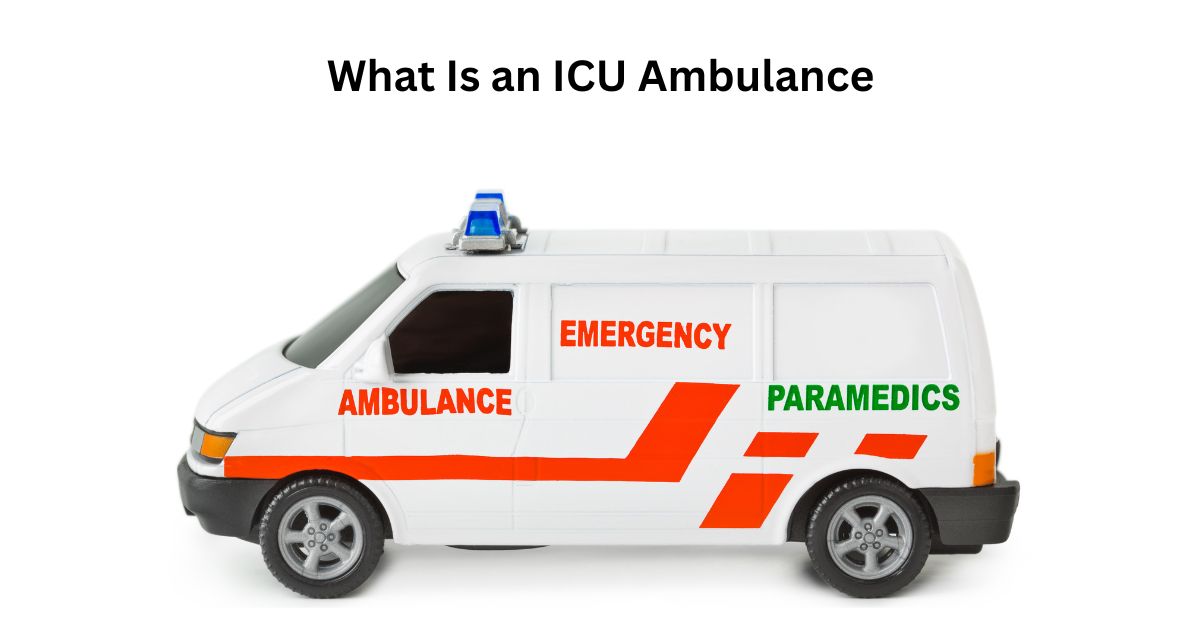
What Is an ICU Ambulance? Equipment, Staff, and When You Need One
📋 Table of Contents
- What Is an ICU Ambulance?
- ICU vs BLS vs ALS – Key Differences
- Equipment Inside an ICU Ambulance
- Staff on Board – Who Travels With the Patient
- When Do You Need an ICU Ambulance?
- Medical Conditions Requiring ICU Transport
- ICU Ambulance Cost in Pakistan (2027)
- FAQs – ICU Ambulance
- Related Articles & Services
Not all ambulances are the same. A basic ambulance provides a stretcher, oxygen, and a safe ride to the hospital. But for a patient on a ventilator, with an unstable heartbeat, or recovering from major surgery, that's not nearly enough. These patients need an ICU ambulance — a vehicle that functions as a mobile intensive care unit.
ICU ambulances are the highest level of medical transport available on the road. They carry the same equipment you'd find in a hospital intensive care unit — ventilators, multi-parameter monitors, defibrillators, and infusion pumps — along with specially trained staff who can manage critically ill patients during transport.
This guide explains exactly what an ICU ambulance is, what's inside it, who staffs it, and — most importantly — how to know when you need one. Families facing critical medical situations need this information before a crisis, not during one.
🏥 What Is an ICU Ambulance?
An ICU ambulance (also called a mobile ICU, critical care transport unit, or CCT ambulance) is a specialized vehicle designed to provide intensive care-level treatment during patient transport. It bridges the gap between hospital ICU and the road.
Core defining features:
- 🫁 Ventilator: For patients who cannot breathe on their own
- 📈 Multi-parameter monitor: Continuous ECG, blood pressure, SpO₂, temperature monitoring
- ⚡ Defibrillator: For cardiac arrest and arrhythmias
- 💉 Infusion pumps: Precise delivery of vasoactive drugs, sedatives, and antibiotics
- 🩸 Suction machine and airway kit: For intubation and airway management
- 🧑⚕️ Critical care staff: Doctor, nurse, or advanced paramedic
- 🔋 Onboard power: Inverter or generator to run equipment continuously
- ❄️ Climate control: Temperature regulation for patient stability
⭐ Simple Definition
An ICU ambulance is a hospital intensive care unit on wheels. It allows a critically ill patient to receive the same level of monitoring and life support during transport that they would receive in a hospital ICU bed.
⚖️ ICU vs BLS vs ALS – Key Differences
Understanding the three tiers of ambulance care helps you choose correctly — and avoid paying for more than you need (or less than your patient requires).
| Feature | BLS Ambulance | ALS Ambulance | ICU Ambulance |
|---|---|---|---|
| Oxygen | ✅ Basic | ✅ High-flow | ✅ Ventilator + high-flow |
| Cardiac Monitor | ❌ No | ✅ Yes | ✅ Multi-parameter |
| Defibrillator | ❌ No | ✅ Yes | ✅ Yes |
| Ventilator | ❌ No | ❌ No | ✅ Yes |
| Infusion Pumps | ❌ No | 🟡 Limited | ✅ Multiple |
| Suction Machine | ✅ Basic | ✅ Yes | ✅ Advanced |
| Staff | EMT | Paramedic | Doctor/Nurse/Paramedic |
| Onboard Power | Limited | Limited | ✅ Inverter/Generator |
| Best For | Stable patients | Cardiac/respiratory emergencies | Ventilated, unstable, critical |
📊 Level of Care Comparison
*Relative capability for managing critical patients during transport.
🧰 Equipment Inside an ICU Ambulance
This is what makes an ICU ambulance different. Each piece of equipment serves a specific life-support function.
| Equipment | Purpose | Why It Matters |
|---|---|---|
| Transport Ventilator | Mechanical breathing support | Keeps patients breathing who cannot breathe on their own |
| Multi-Parameter Monitor | Continuous ECG, BP, SpO₂, temperature | Detects deterioration instantly |
| Defibrillator | Electric shock for cardiac arrest | Life-saving for arrhythmias |
| Infusion Pumps (2–4) | Precise IV drug delivery | Vasoactive drugs, sedatives, antibiotics |
| Suction Machine | Clears airway secretions | Prevents choking and aspiration |
| Oxygen Cylinders | High-flow oxygen supply | Essential for all critical patients |
| Airway Management Kit | Intubation, laryngoscope, tubes | Secures airway if patient deteriorates |
| Emergency Drug Kit | Resuscitation medications | Immediate response to cardiac arrest |
| Power Inverter/Generator | Continuous electricity | Equipment cannot stop mid-transport |
| Climate Control | Temperature regulation | Prevents hypothermia/hyperthermia |
| Stretcher with Secure Mounting | Safe patient positioning | Prevents movement during transport |
| Backup Battery Systems | Power redundancy | Ensures equipment keeps running |
Total equipment value: A fully equipped ICU ambulance carries medical equipment worth PKR 40–80 lakh or more — which is why the service costs significantly more than a basic ambulance.
🧑⚕️ Staff on Board – Who Travels With the Patient
The equipment is only half the equation. An ICU ambulance is only as good as the people operating it.
| Staff Member | Role | Qualifications |
|---|---|---|
| Critical Care Paramedic | Primary patient care, monitoring, procedures | Advanced life support certified |
| ICU Nurse | Medication administration, monitoring, documentation | RN with critical care experience |
| Doctor (optional) | Clinical decision-making, advanced procedures | MBBS with ICU/emergency experience |
| Ambulance Driver | Safe transport, route navigation | Trained in emergency driving |
| Attendant (optional) | Assistance with patient handling | Basic first aid trained |
What ICU staff can do during transport:
- 📈 Interpret cardiac rhythms and adjust treatment
- 🫁 Manage ventilator settings based on patient's condition
- 💉 Titrate vasoactive infusions (dopamine, noradrenaline)
- 🩸 Administer blood products if needed
- ⚡ Defibrillate or pace the heart
- 🫁 Perform emergency intubation
- 💊 Administer resuscitation medications
- 🩺 Make clinical decisions when the patient deteriorates
✅ When Do You Need an ICU Ambulance?
This is the most important question. Here's a clear decision guide.
• Is on a ventilator (breathing machine)
• Requires continuous cardiac monitoring
• Is receiving vasoactive IV drugs (dopamine, noradrenaline, dobutamine)
• Has an unstable heart rhythm
• Is recovering from major surgery (cardiac, neuro, transplant)
• Has severe trauma with multiple injuries
• Is in respiratory failure requiring high-flow oxygen
• Has severe head injury with reduced consciousness
• Requires blood transfusion during transport
• Is a critically ill neonate or premature infant
• Needs intercity transfer with ongoing critical care
🩺 Medical Conditions Requiring ICU Transport
These are the specific conditions where ICU ambulances are typically required.
| Condition | Why ICU Transport Is Needed | Equipment Used |
|---|---|---|
| Acute Myocardial Infarction (Heart Attack) | Continuous ECG, defibrillation, IV drugs | Monitor, defibrillator, infusion pumps |
| Cardiac Arrest (Post-Resuscitation) | Ventilator, cardiac monitoring, vasoactive drugs | Ventilator, monitor, infusion pumps |
| Stroke (Acute) | BP control, oxygen, monitoring | Monitor, oxygen, infusion pumps |
| Respiratory Failure | Mechanical ventilation, high-flow oxygen | Ventilator, oxygen, suction |
| Severe Trauma / Polytrauma | Blood transfusion, monitoring, airway management | Monitor, infusion pumps, airway kit |
| Post-Cardiac Surgery | Ventilator, cardiac monitoring, drainage | Ventilator, monitor, suction |
| Post-Neurosurgery | ICP monitoring, ventilation, sedation | Ventilator, monitor, infusion pumps |
| Organ Transplant Patients | Immunosuppression, monitoring, infection control | Monitor, infusion pumps, oxygen |
| Neonatal Critical Care | Incubator, neonatal ventilator, temperature control | Incubator, neonatal ventilator, monitor |
| Sepsis / Septic Shock | Vasoactive drugs, fluid resuscitation, monitoring | Monitor, infusion pumps, oxygen |
| Cancer (Critical) | Pain management, oxygen, monitoring | Monitor, oxygen, infusion pumps |
💰 ICU Ambulance Cost in Pakistan (2027)
ICU ambulances cost more than BLS or ALS ambulances because of the equipment, staff, and consumables involved. Here are indicative rates.
| Service Type | Within City | Intercity (100–300 km) | Long Distance (300+ km) |
|---|---|---|---|
| ICU Ambulance (Ventilator) | PKR 15,000 – 30,000 | PKR 50,000 – 90,000 | PKR 90,000 – 1,50,000 |
| ICU with Doctor | PKR 25,000 – 40,000 | PKR 80,000 – 1,20,000 | PKR 1,20,000 – 1,90,000 |
| ICU with Ventilator + Nurse | PKR 20,000 – 35,000 | PKR 70,000 – 1,10,000 | PKR 1,10,000 – 1,60,000 |
| Neonatal ICU Ambulance | PKR 20,000 – 35,000 | PKR 65,000 – 1,00,000 | PKR 1,00,000 – 1,50,000 |
What's included:
- 🚑 Ambulance, fuel, and toll charges
- 🧑⚕️ Critical care staff (paramedic, nurse, or doctor)
- 🫁 Oxygen and consumables used during transport
- 📈 Equipment usage (ventilator, monitor, infusion pumps)
- 🛣️ Driver and route planning
- 📞 Coordination with receiving hospital
For a detailed cost breakdown, see our guide on ICU ambulance costs in Pakistan.
❓ Frequently Asked Questions – ICU Ambulance
1. What is the difference between an ICU ambulance and a regular ambulance?
A regular (BLS) ambulance provides oxygen, a stretcher, and basic first aid. An ICU ambulance carries a ventilator, cardiac monitor, defibrillator, infusion pumps, and critical care staff — essentially a mobile intensive care unit. It's used for patients too unstable for standard transport.
2. When should I request an ICU ambulance instead of a BLS ambulance?
Request an ICU ambulance if the patient is on a ventilator, requires continuous cardiac monitoring, is receiving vasoactive IV drugs, has an unstable heart rhythm, is recovering from major surgery, or has severe trauma. If unsure, call us and our medical coordinator will help you decide.
3. Is a doctor always present in an ICU ambulance?
Not always. Standard ICU ambulances are staffed by a critical care paramedic and/or ICU nurse. A doctor can be added for an additional cost, and is recommended for the most critical patients — those requiring advanced procedures or complex clinical decisions during transport.
4. How much does an ICU ambulance cost in Pakistan?
Within a city, ICU ambulance costs range from PKR 15,000–40,000 depending on whether a doctor is included. Intercity transfers cost PKR 50,000–1,90,000. Prices vary by distance, equipment, and provider. Call +92 329 8041122 for an exact quote.
5. Can an ICU ambulance transfer a patient between cities?
Yes. ICU ambulances are specifically designed for long-distance critical care transport. They carry enough oxygen, power backup, and medications for journeys of 4–20 hours. We regularly transfer patients between Lahore, Karachi, Islamabad, Rawalpindi, Peshawar, and Multan.
🔗 Related Articles & Our Ambulance Services
Our Services:
🚑 Ambulance Service in Pakistan✈️ Airport Ambulance Service
🎪 Event Medical Coverage Pakistan
🏥 ICU Ambulance Service
Helpful Articles:
❤️ CPR in Pakistan: How to Perform Basic Life Support🚑 Emergency Ambulance in Lahore: A Complete Guide for Families
🌙 Ambulance Service During Eid and Ramadan in Pakistan
🚀 Future of Ambulance Services in Pakistan: Technology & Innovation
🏥 ICU ambulance — when every second and every level of care matters.
📞 Call: +92 329 8041122 💬 WhatsApp UsVentilator-equipped ICU ambulances with critical care staff — available 24/7 across Pakistan and all motorways.
© Insaf Ambulance Services – Rapid, Reliable, and Compassionate Emergency Care Across Pakistan.