


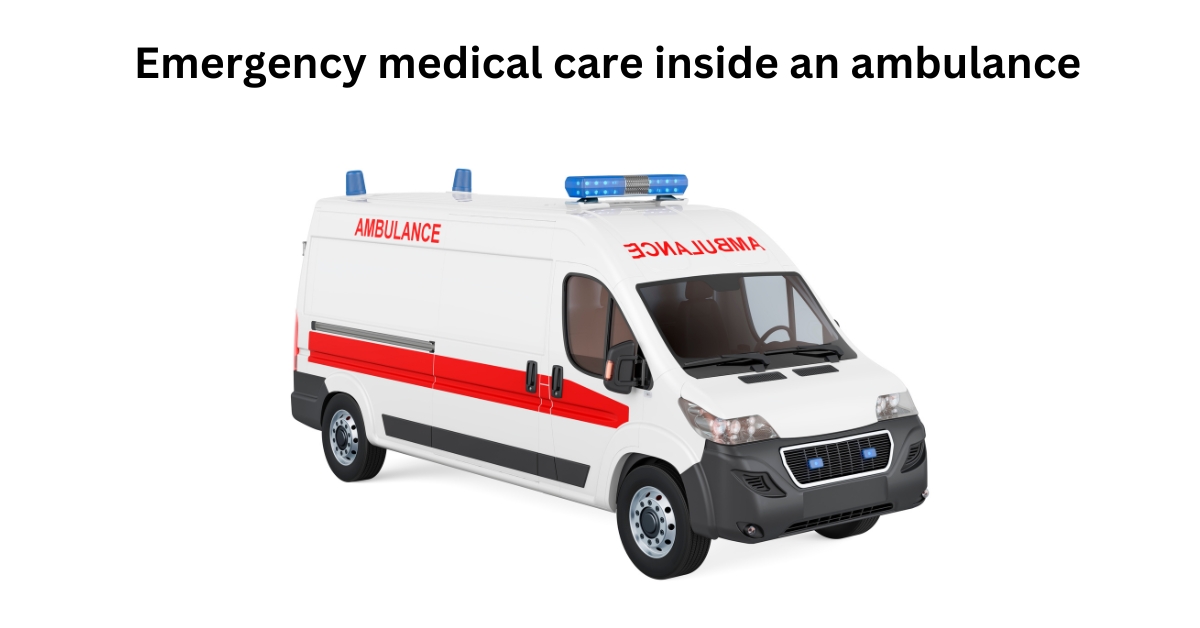
🚑 Emergency Medical Care Inside an Ambulance — What Paramedics Do 24/7
📑 Table of Contents
- 1. Introduction: The Ambulance as a Mobile ICU
- 2. The Paramedic's Role: More Than Just Driving
- 3. Patient Assessment: The First Critical Step
- 4. Advanced Life Support: Airway, Breathing, Circulation
- 5. Inside the Ambulance: Life-Saving Equipment
- 6. Medications Administered by Paramedics
- 7. Common Emergency Procedures
- 8. Safe Transport & Continuous Monitoring
- 9. Handover to the Emergency Department
- 10. Frequently Asked Questions
- 11. Related Articles
1. Introduction: The Ambulance as a Mobile ICU
When a medical emergency strikes, the ambulance is more than just a vehicle — it is a mobile intensive care unit. Inside, highly trained paramedics work tirelessly to stabilise patients, manage life-threatening conditions, and provide continuous critical care during transport to the hospital[reference:0]. The goal is simple: preserve life, prevent deterioration, and promote recovery — the three Ps of emergency care[reference:1].
Emergency medical care inside an ambulance follows a structured, protocol-driven approach. From the moment a paramedic arrives on scene, every action is deliberate and aimed at identifying and treating life-threatening issues first. The ABCs — Airway, Breathing, Circulation — are the foundation of all emergency care[reference:2]. Without a patent airway and adequate breathing, the brain suffers irreversible damage within minutes[reference:3].
At Insaf Ambulance Services, we understand that every second counts. Our ambulances are staffed with experienced paramedics and equipped with state-of-the-art medical devices to handle everything from minor injuries to cardiac arrests. Whether you need an ambulance in Rawalpindi, Islamabad, Lahore, or anywhere in Pakistan, our 24/7 emergency response ensures you receive the care you need — fast[reference:4].
2. The Paramedic's Role: More Than Just Driving
Paramedics are highly trained health professionals who provide advanced emergency medical care in the pre-hospital environment[reference:5]. They are physician extenders who function under medical oversight, performing complex interventions with the basic and advanced equipment found on an ambulance[reference:6]. Their duties go far beyond driving — they are clinicians, decision-makers, and compassionate caregivers.
Advanced Life Support (ALS) trained
Comprehensive patient assessment
Medication administration
Cardiac monitoring & defibrillation
Paramedics are responsible for scene management, making autonomous patient care decisions, and ensuring high-quality clinical documentation[reference:7]. They work closely with emergency medical technicians (EMTs) who assist with assessment, documentation, and direct patient care[reference:8]. Together, they form a cohesive team that delivers life-saving care under immense pressure.
At Insaf Ambulance, our paramedics undergo rigorous training and are certified in CPR, ACLS, PALS, and other advanced life support protocols[reference:9]. They are equipped to handle trauma, cardiac emergencies, respiratory distress, overdoses, and obstetric emergencies — ensuring that every patient receives the right care at the right time.
3. Patient Assessment: The First Critical Step
The first thing a paramedic does upon reaching a patient is a rapid, systematic assessment. This begins with a primary survey to identify and treat immediate life threats. The ABCs — Airway, Breathing, Circulation — are assessed first[reference:10]. Any obstruction, inadequate breathing, or severe bleeding is addressed immediately.
- Airway: Is the airway open? If not, the paramedic will use manual techniques, oropharyngeal/nasopharyngeal airways, or advanced airway devices like endotracheal tubes to secure it[reference:11].
- Breathing: Is the patient breathing adequately? Oxygen is administered, and ventilatory support is initiated if needed. Capnography (EtCO2) is used to monitor ventilation effectiveness[reference:12].
- Circulation: Is there a pulse? Is the patient in shock? Cardiac monitoring, IV access, and fluid resuscitation are started as indicated[reference:13].
After the primary survey, a secondary survey is conducted to gather a patient history, perform a head-to-toe physical examination, and obtain vital signs[reference:14]. This information is crucial for diagnosing the underlying condition and guiding treatment during transport.
4. Advanced Life Support: Airway, Breathing, Circulation
Once the initial assessment is complete, paramedics provide advanced life support (ALS) interventions. These are life-saving procedures that go beyond basic first aid and require specialised training and equipment[reference:15].
| Intervention | Description | Equipment Used |
|---|---|---|
| Airway Management | Endotracheal intubation, supraglottic airway placement, needle cricothyroidotomy | Laryngoscope, endotracheal tubes, bougie, suction |
| Ventilatory Support | Mechanical ventilation, CPAP/BiPAP, high-flow nasal cannula | Transport ventilator, CPAP mask, HFNC device |
| Cardiac Monitoring & Defibrillation | ECG interpretation, cardioversion, external pacing, defibrillation | Monitor/defibrillator, pads, electrodes |
| Vascular Access | IV/IO access for fluid and medication administration | IV catheters, IO needles, infusion pumps |
| Medication Administration | Emergency drugs for cardiac arrest, anaphylaxis, pain, etc. | Syringes, IV bags, drug protocols |
Paramedics are trained to perform needle thoracostomy for tension pneumothorax, chest tube management, and even emergency transfusion of blood products in critical situations[reference:16]. These advanced skills can mean the difference between life and death for critically ill or injured patients.
5. Inside the Ambulance: Life-Saving Equipment
An ambulance is a mobile emergency room, stocked with a wide array of medical devices and consumables. From bedside monitors to ECG machines to syringe drivers, every piece of equipment serves a specific purpose[reference:17].
- 🫀 Defibrillator / Monitor: For cardiac monitoring, defibrillation, and pacing[reference:18].
- 💨 Oxygen & Ventilation: Oxygen cylinders, bag-valve-mask (BVM), transport ventilator[reference:19].
- 💉 IV & IO Access: Catheters, infusion pumps, intraosseous needles[reference:20].
- 🩺 Airway Management: Laryngoscopes, endotracheal tubes, supraglottic airways, suction[reference:21].
- 🦴 Immobilisation: Spinal boards, cervical collars, splints, traction devices[reference:22].
- 📡 Communication: Two-way radios, GPS tracking, telemetry for transmitting ECGs to hospitals[reference:23].
- 🧰 Jump Bag: A portable kit containing basic life support and trauma supplies, grabbed first on scene[reference:24].
At Insaf Ambulance, our vehicles are regularly inspected and maintained to ensure all equipment is functional and ready for any emergency[reference:25]. Our paramedics receive ongoing training on the latest devices and protocols.
6. Medications Administered by Paramedics
Paramedics administer a wide range of medications to manage pain, stabilise vital signs, and treat specific conditions[reference:26][reference:27]. All medications are given under standing orders from a physician medical director or via direct orders from a transferring physician[reference:28].
| Condition | Common Medications |
|---|---|
| Cardiac Arrest | Epinephrine, Amiodarone, Atropine |
| Anaphylaxis | Epinephrine (IM), Antihistamines, Corticosteroids |
| Asthma / COPD | Salbutamol, Ipratropium, Corticosteroids |
| Pain Management | Morphine, Fentanyl, Ketamine |
| Seizures | Midazolam, Diazepam, Lorazepam |
| Diabetes (Hypoglycemia) | Dextrose (IV), Glucagon |
| Overdose / Poisoning | Naloxone (opioid reversal), Activated charcoal |
| Heart Failure | Nitroglycerin, Furosemide, Morphine |
In addition to these, paramedics may administer antibiotics, anti-emetics, and fluids to maintain blood pressure and replace lost volume[reference:29]. The ability to administer medications on scene can significantly improve patient outcomes before hospital arrival.
7. Common Emergency Procedures Performed by Paramedics
Paramedics are trained to perform a variety of invasive and non-invasive procedures to stabilise patients in the pre-hospital setting[reference:30]. These procedures are performed under strict protocols and with sterile technique to minimise infection risk.
- Endotracheal Intubation: Securing the airway with a tube inserted into the trachea[reference:31].
- Needle Cricothyroidotomy: Emergency surgical airway when intubation fails[reference:32].
- Intraosseous (IO) Access: Inserting a needle into the bone marrow for vascular access when IV access is difficult[reference:33].
- Needle Thoracostomy: Relieving tension pneumothorax by inserting a needle into the chest cavity[reference:34].
- Cardioversion & Defibrillation: Delivering electrical shocks to restore normal heart rhythm[reference:35].
- External Pacing: Using a device to pace the heart in bradycardia[reference:36].
- Fracture Reduction & Splinting: Realigning and immobilising broken bones[reference:37].
- Wound Care: Cleaning, closing, and dressing wounds[reference:38].
- Point-of-Care Ultrasound (POCUS): Performing bedside lung and shock ultrasounds to guide treatment[reference:39].
These procedures require precision, skill, and calm under pressure. Our paramedics at Insaf Ambulance are regularly evaluated and trained to maintain proficiency in all these critical skills.
8. Safe Transport & Continuous Monitoring
Once the patient is stabilised, the ambulance transports them to the most appropriate medical facility. During transport, paramedics provide continuous monitoring and ongoing care[reference:40]. The patient's condition can change rapidly, so paramedics must remain vigilant and ready to intervene at any moment.
- Continuous Vital Sign Monitoring: Heart rate, blood pressure, oxygen saturation, and EtCO2 are monitored throughout the journey[reference:41].
- Reassessment: Paramedics frequently reassess the patient's ABCs and response to treatment[reference:42].
- Communication: The paramedic relays clinical data to the receiving hospital via radio or telemetry, allowing the emergency department to prepare for the patient's arrival[reference:43].
- Comfort & Safety: Patients are secured with straps, and the ambulance is driven smoothly to minimise movement[reference:44].
- Documentation: All findings, interventions, and medication administrations are meticulously documented for the hospital staff[reference:45].
At Insaf Ambulance, we prioritise patient safety and comfort during transport. Our ambulances are GPS-tracked, allowing family members and hospitals to track the vehicle in real time and receive ETA updates.
9. Handover to the Emergency Department
The final step in emergency medical care inside an ambulance is the handover to the hospital's emergency department. This is a critical moment where the paramedic provides a concise, accurate summary of the patient's condition, history, and treatment received.
- Situation: What is the patient's chief complaint and diagnosis?
- Background: Relevant medical history, allergies, and medications.
- Assessment: Vital signs, physical exam findings, and results of any tests (e.g., ECG, ultrasound).
- Recommendation: What further care is needed? What is the patient's acuity level?
This structured handover ensures that the receiving team has all the information they need to continue care seamlessly. Paramedics also assist hospital personnel with patient transfer and may stay to provide additional information if needed[reference:46].
At Insaf Ambulance, we take pride in our professional, compassionate handovers that facilitate continuity of care and optimal patient outcomes.
10. Frequently Asked Questions – Emergency Medical Care in an Ambulance
11. Related Articles & Resources
📖 Read more from Insaf Ambulance Services:
🏥 Ambulance Booking for Surgeries – Islamabad 🚑 ICU Ambulance from CMH to Shifa Hospital 🏛️ Government vs. Private Ambulance in Pakistan 🚨 Ambulance Service in Johar Town, LahoreInsaf Ambulance Services — humanitarian medical transport since 2015.
Serving Rawalpindi, Islamabad, Lahore, and all major cities of Pakistan with transparent pricing,
advanced equipment, and compassionate care.
📞 +92 3298041122
| ✉️ Contact Us